
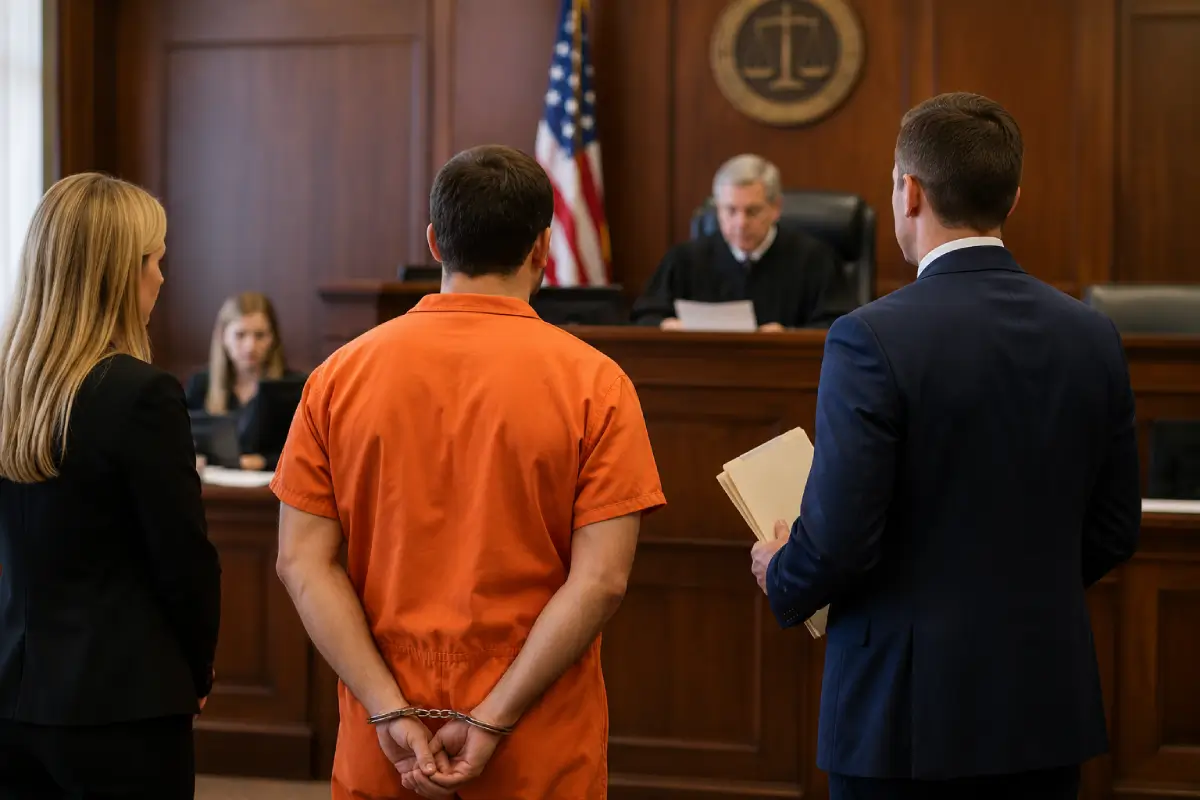
If you have been charged with a crime, you may hear that your case has been set for an arraignment. However, unlike many other states, an arraignment is not automatically required in every criminal case. The procedure depends on the court handling the case, the charging document, and whether the defendant requests an arraignment or the court orders one.
With experienced guidance from Martine Law, understanding the statutory purpose of an arraignment, how it differs from a first appearance, and what occurs during the hearing can help you make informed decisions and better manage the criminal justice process.
What Does Arraignment Mean Under Law?
An arraignment is a formal criminal proceeding in which the defendant is called before the court, informed of the charges contained in the charging document, and required to enter a plea. The procedure is governed primarily by N.C.G.S. § 15A-941, which defines the purpose and circumstances of arraignment in superior court. The arraignment itself is not a trial, an evidentiary hearing, or a determination of guilt. Instead, it serves several procedural functions:
- Advises the defendant of the charges pending before the court
- Confirms that the defendant is represented by counsel or has validly waived that right
- Requires the defendant to enter a plea
- Allows the case to proceed toward pretrial proceedings or trial
Although arraignment is a familiar feature of criminal cases nationwide, North Carolina’s statutory framework differs from jurisdictions where every defendant automatically receives an arraignment.
When Is an Arraignment Required?
Arraignment in superior court is generally not mandatory unless one of the following occurs:
- The defendant files a timely written request for arraignment.
- The court orders an arraignment on its own motion.
If neither occurs, the superior court may proceed without conducting a formal arraignment. Because the decision to request an arraignment may involve procedural and strategic considerations, defendants should consult defense counsel before waiving or requesting one.
First Appearance vs. Arraignment
Although the terms are sometimes used interchangeably, a first appearance and an arraignment serve different legal purposes.
| First Appearance | Arraignment |
|---|---|
| Usually occurs shortly after arrest. | Usually occurs after formal charges are pending in the appropriate court. |
| Advises the defendant of constitutional rights. | Formally advises the defendant of the charges contained in the charging document. |
| Bail or conditions of release may be addressed. | The defendant enters a plea. |
| Focuses on custody and preliminary procedures. | Focuses on preparing the case for further criminal proceedings. |
A defendant may have a first appearance without ever having a formal arraignment, particularly in cases where arraignment is waived or not requested.
District Court vs. Superior Court
The role of an arraignment depends largely on which North Carolina trial court has jurisdiction over the case.
District Court Proceedings
District courts generally handle:
- Misdemeanor prosecutions
- Infractions
- Initial felony proceedings before indictment
- Probable cause hearings in qualifying felony cases
Many district court matters proceed without a traditional superior court arraignment.
Superior Court Proceedings
Superior courts have jurisdiction over:
- Felony prosecutions following indictment or other authorized charging procedures
- Jury trials
- Serious criminal offenses
It is in superior court that N.C.G.S. § 15A-941 governs arraignment procedures.
Know more – What to Do Immediately After Being Charged with a Felony in North Carolina
The Arraignment Process
A typical arraignment is brief and procedural. Although each case differs, the hearing generally includes the following steps.
Formal Reading of the Charges
The court identifies the criminal charges alleged in the applicable charging document, which may include an indictment or another authorized pleading. The purpose is to ensure that the defendant understands the offenses pending before the court.
Entry of a Plea
The defendant is then required to enter a plea. Common pleas include:
- Not Guilty, requiring the State to prove every element of the offense beyond a reasonable doubt.
- Guilty, admitting the charged offense, subject to the court’s acceptance after determining the plea is entered knowingly, voluntarily, and intelligently.
- No Contest (Nolo Contendere), which may be accepted only with the court’s consent under the law and does not constitute an express admission of factual guilt.
The court may conduct additional inquiries before accepting any guilty or no contest plea.
Scheduling Future Proceedings
If the case does not resolve during the arraignment, the court typically schedules future proceedings, including motion hearings, administrative settings, or trial dates according to the court calendar.
You may benefit from legal guidance tailored to your case to understand better this formal court proceeding and your available legal options.
The Role of an Indictment
Many felony cases reach superior court after a grand jury returns an indictment. An indictment is a formal written accusation alleging that probable cause exists to prosecute the defendant for the specified felony offense. It is not evidence of guilt and creates no presumption that the defendant committed the alleged crime. Once an indictment has been returned, the superior court obtains jurisdiction to proceed with the felony prosecution, including arraignment when required.
Plea Agreements Before Arraignment
Plea negotiations frequently occur before an arraignment, and in some cases the parties present a negotiated plea agreement during the hearing. However, many defendants enter a not guilty plea so that defense counsel may:
- Review discovery
- Investigate the allegations
- File pretrial motions
- Evaluate possible legal defenses
- Continue negotiations with the prosecutor
Whether a plea agreement is appropriate depends on the specific facts, available evidence, applicable sentencing laws, and the defendant’s legal objectives.
What Happens After an Arraignment?
After the arraignment, the case typically continues through the pretrial phase. Possible next steps include:
- Discovery review
- Motion hearings
- Plea negotiations
- Administrative court settings
- Trial scheduling
- Jury trial in superior court, if no plea resolves the case
The timing depends on the complexity of the case, the court’s session calendar, pending motions, and local scheduling practices.
Why Defense Counsel Matters Before Arraignment
Even though an arraignment is generally brief, it can affect how the case proceeds. Defense counsel can:
- Explain the charges and possible penalties
- Determine whether a written request for arraignment should be filed
- Protect the defendant’s constitutional and procedural rights
- Evaluate plea options
- Begin negotiations with the prosecutor
- Identify potential legal challenges before trial
Obtaining legal advice early often helps ensure that important procedural rights are preserved.
Get Legal Help Before Your Arraignment
An arraignment is an important procedural stage in a criminal case, but it is only one part of the legal process. The decisions made before and during this hearing, including how charges are addressed, whether a plea is entered, and how the case proceeds, can have lasting consequences. Because arraignment procedures differ from those of many other states, understanding your rights and the applicable legal requirements is essential.
The experienced criminal defense attorneys at Martine Law can explain the charges against you, protect your rights throughout the criminal process, and develop a defense strategy tailored to your case. Contact us anytime at +1 (612) 979-1305 to schedule a confidential consultation and discuss your next steps before your arraignment or any other court proceeding.
Frequently Asked Questions
Can my arraignment be postponed?
Yes. An arraignment may be continued if the court grants a continuance. Whether a continuance is appropriate depends on the circumstances of the case, applicable procedural rules, and the court’s discretion. Defendants should not assume a court date will be postponed simply because they request it.
Can the charges against me change after an arraignment?
Yes. Depending on the procedural posture of the case and applicable law, prosecutors may seek to amend certain charging documents or pursue additional charges when legally permitted. Any changes must comply with the law and the defendant’s constitutional rights.
Will the prosecutor discuss my case with me before the arraignment?
If you are represented by an attorney, prosecutors generally communicate through your defense counsel rather than directly with you. If you do not have an attorney, the prosecutor may discuss certain procedural matters, but you should understand your legal rights before making any statements or decisions.
Can I change my plea after an arraignment?
Possibly. A defendant may be permitted to change a previously entered plea under certain circumstances and subject to applicable procedural rules. Whether a court allows a plea change depends on factors such as the stage of the proceedings and the reason for the request.
What happens if I fail to appear for my arraignment?
Failing to appear for a required court proceeding may result in serious consequences, including the issuance of an order for arrest or other sanctions authorized by the law. If you believe you cannot attend a scheduled hearing, contact your attorney as soon as possible.
This page states North Carolina law and is for general information, not legal advice.