

If you’re facing felony charges in North Carolina, you may worry about jail time, court appearances, and what this means for your future. A felony is serious, but you still have rights and paths forward.
After being charged with a felony, stay calm, avoid talking about the case, and speak with a lawyer before making any decisions. Trying to handle things alone can make the situation harder. Understanding the NC felony court process helps you avoid mistakes. Slowing down and learning your rights is one of the best steps you can take.
At Martine Law, we guide people through moments like this with respect and clear answers. We help you understand each step and build a strategy that protects your future.
If you need direction right now, contact us anytime to discuss your case and next steps.
What Is a Felony Charge in North Carolina
Felonies represent the most serious category of criminal offenses in North Carolina. According to the law, a felony is a crime that…
(1) was historically a felony at common law,
(2) is punishable by death,
(3) is punishable by imprisonment in the State’s prison system, or
(4) is expressly defined as a felony in the statutes.
Any crime that does not meet these criteria is classified as a misdemeanor. Examples of felony offenses include certain violent crimes, serious drug offenses, and major theft or property crimes. Even where no property is taken, acts like breaking into a home while someone is present can still be charged as a felony due to the high risk of harm involved.
When you know how felony charges are classified in North Carolina, it becomes easier to understand what you’re really facing.
Steps to Take After a Felony Charge in North Carolina
Use this simple checklist to protect yourself:
- Do not discuss the case with police or anyone else without legal guidance.
- Save all paperwork and court notices. Mark your dates on a calendar.
- Write down what happened while the details are still fresh.
- Avoid contact with witnesses or the alleged victim unless approved by your lawyer.
- Speak with Martine Law experts as soon as possible.
- Follow all release or bond instructions closely.
- Keep questions written down so you can review them with your lawyer.
If this feels like a lot to handle, reach out for help. Support is available when you need it.
How the NC Felony Court Process Works
Felony cases in North Carolina usually follow a set sequence. Typical stages include:
Arrest or Criminal Summons:
Law enforcement files charges, either by physically arresting you or issuing a summons requiring you to appear in court.
First Appearance (District Court):
A judge informs you of the charges, discusses your right to counsel, and addresses release conditions such as bond.
Probable Cause Hearing or Grand Jury Indictment:
The court or a grand jury determines whether there is enough evidence for the case to continue as a felony. If probable cause is found or an indictment is returned, the case is sent to the Superior Court.
Arraignment (Superior Court):
You are formally advised of the charges and typically enter a plea.
Discovery and Investigation:
The prosecution must share evidence required by law, while the defense investigates, gathers records, and consults experts or witnesses.
Motions and Negotiations:
Your attorney may challenge evidence, seek suppression of unlawfully obtained information, request dismissal, or negotiate for reduced charges or alternative outcomes.
Trial:
If the case is not resolved, a judge or jury hears the evidence and decides guilt or innocence under North Carolina’s rules of criminal procedure.
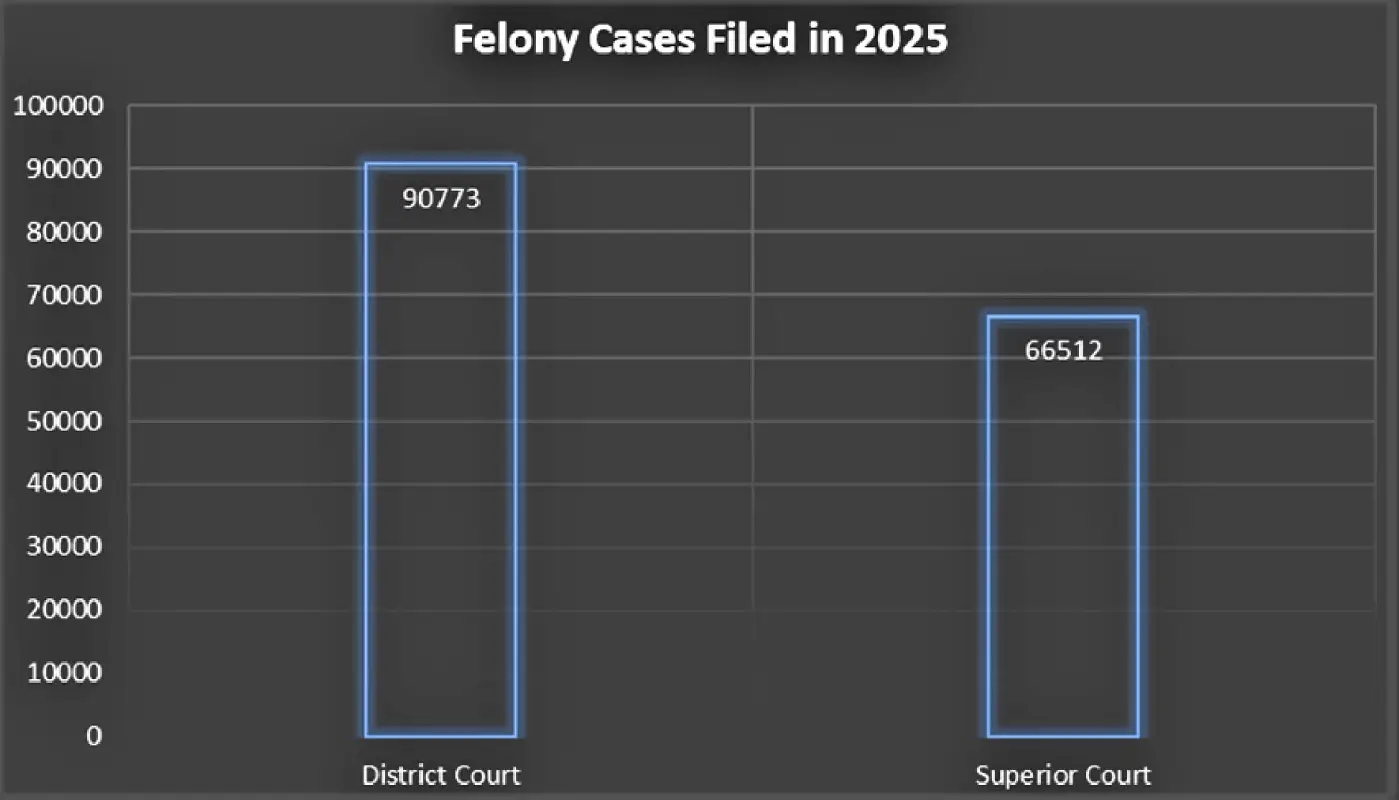
In 2025, North Carolina recorded 157,285 felony filings. The higher District Court total represents cases entering the system, while the Superior Court number shows those that moved forward to more serious proceedings.
Not every case reaches trial. A skilled defense strategy can sometimes reduce or resolve matters sooner.
Actions That Can Damage Your Felony Charges in NC
Try to avoid these pitfalls:
- Posting about your case on social media
- Ignoring court letters or missing dates
- Talking to the police without your lawyer’s advice
- Assuming the case will disappear on its own
- Contacting witnesses directly
- Trusting rumors instead of real legal information
These mistakes can limit your options. Quick legal guidance often prevents bigger problems.
Legal Guidance When You Are Facing Felony Charges
At Martine Law, we focus on protecting your rights and your future. Our approach includes:
- Careful review of police reports, video, and evidence
- Challenging weak proof and illegal searches
- Negotiating with prosecutors when appropriate
- Preparing thoroughly for trial when needed
- Explaining each step clearly and simply
Our assistants and paralegals are available 24/7, and our expert lawyers understand how North Carolina courts actually work. When you need answers, we are here to guide you.
Key Takeaways
- Felonies can lead to more than one year in prison, so early guidance matters.
- Staying quiet, organized, and careful protects your rights.
- The court process follows clear steps, and knowing them reduces fear.
- Mistakes like posting online or missing court dates can harm your case.
- A defense lawyer helps you understand options and pushes for the best result possible.
North Carolina law imposes severe penalties, but there are defenses available. A knowledgeable defense lawyer can protect your rights and help you understand your choices.
If you want steady support and clear answers, Martine Law is ready to stand beside you. If you want private advice about your case, contact us or call (704) 842-3411.
Frequently Asked Questions About Felony Charges in North Carolina
How fast do felony cases move in North Carolina?
Some cases move quickly, while others take months. Timing depends on evidence, court schedules, and investigation needs.
Can a felony ever be reduced to a misdemeanor?
In some cases, a felony can be reduced to a misdemeanor, depending on the facts, your history, and negotiations with the prosecutor. A lawyer evaluates whether a reduction is realistic.
Do I have to talk to the police after being charged?
No. You have the right to remain silent. Asking for a lawyer is often the safest way to protect yourself.
Will I go to jail while my case is pending?
It depends on your charge, history, and bond conditions. Many people remain out while their case moves forward if they follow the rules.
Should I hire a lawyer even if I think I am innocent?
Yes. Innocent people can still face risk. A lawyer helps protect you, challenge evidence, and guide you through the process.