
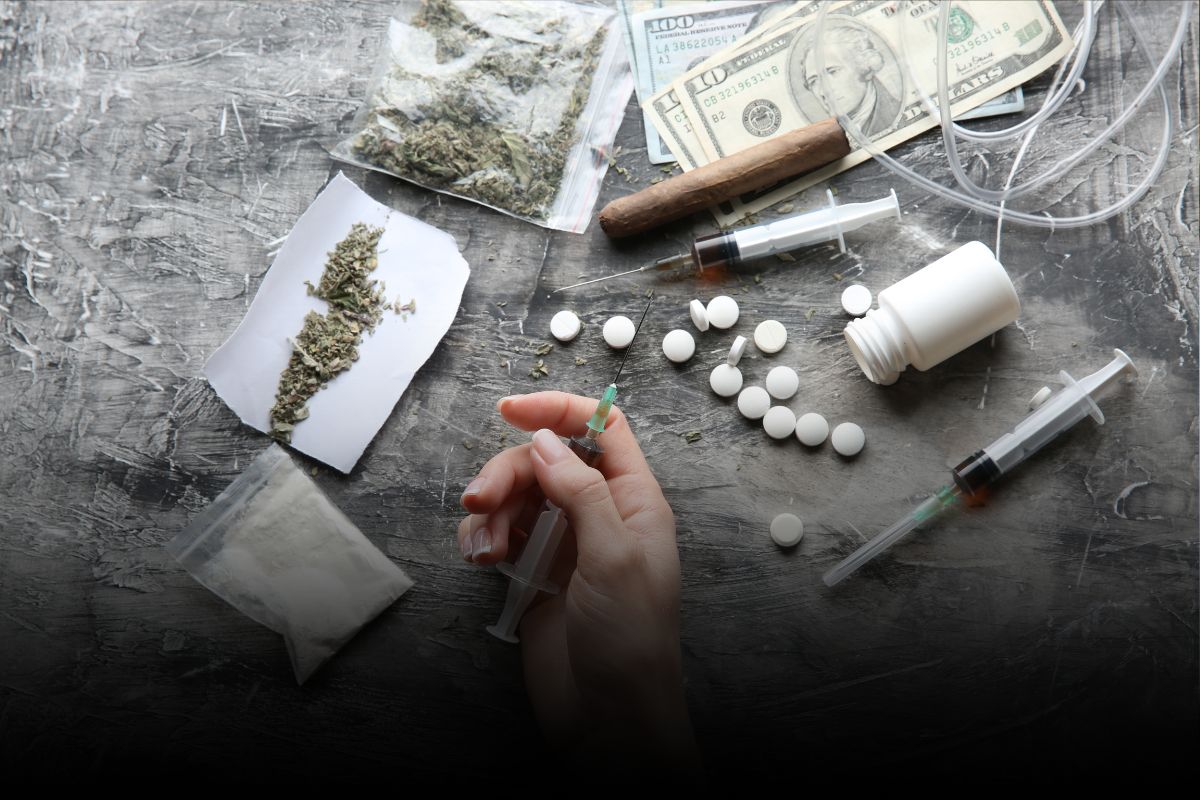
While police officers make the initial charge, prosecutors review the evidence later to determine which charge level applies under North Carolina law.
North Carolina drug laws are governed primarily by Chapter 90 of the North Carolina General Statutes.
At Martine Law, we help you understand how police and prosecutors evaluate drug cases in real North Carolina courts.
To know more, reach out to Martine Law, or call us.
Repercussions Of Being Caught With Drugs In North Carolina
Standard drug-related charges include:
- Simple possession
- Possession with intent to sell or deliver
- Manufacturing or cultivation
- Trafficking
Legal Procedure For Being Caught With Drugs In North Carolina
Prosecutors commonly evaluate the following:
- Type of drug and schedule classification
- Total weight or quantity
- Packaging method
- Presence of cash or paraphernalia
- Statements made during the encounter
- Prior criminal history
How evidence in a drug charge is commonly interpreted
When prosecutors review a drug case in North Carolina, they do not look at each piece of evidence in isolation. They evaluate the overall picture and ask what the evidence suggests about your intent. Items that may seem harmless on their own can take on a different meaning when viewed together. This is often where charge levels increase, even when no sale was witnessed.
| Evidence found | How prosecutors may view it |
| Small amount, one container | Personal use |
| Multiple baggies | Possible intent to sell |
| Digital scale | Distribution related |
| Large amount of cash | Drug sales proceeds |
| Text messages | Evidence of transactions |
Misdemeanor vs felony drug charges in North Carolina
Not all drug possession charges are treated the same under North Carolina law. The differences between a misdemeanor and a felony often depend on how prosecutors interpret quantity, intent, and surrounding circumstances.
This distinction matters because felony charges carry significantly higher penalties and long-term consequences.
| Factor | Misdemeanor possession | Felony drug charge |
| Quantity | Small, personal use | Larger or threshold-based |
| Intent | No distribution alleged | Intent inferred or alleged |
| Penalties | Fines or probation | Prison exposure |
| Record impact | Criminal record | Felony conviction |
Steps You Should Take when Facing A Drug Charge In North Carolina?
Consider the following:
- Remain silent and request a lawyer
- Do not consent to searches
- Preserve paperwork and bond documents
- Write down details as soon as possible
Early legal guidance helps protect your options.
Contact us at Martine Law today.
Common Penalties Or Possible Outcomes
Possible consequences of a drug charge in North Carolina may include:
- Monetary fines
Courts often impose fines as part of a drug conviction. The amount can vary widely based on whether the charge is a misdemeanor or felony, the substance involved, and your prior record. Fines may be imposed alone or alongside other penalties. - Probation with conditions
Many drug cases result in probation instead of immediate jail time. Probation typically comes with strict requirements such as regular check-ins with a probation officer, drug testing, court-ordered evaluations, and compliance with treatment or education programs. - Mandatory treatment programs
Judges may require substance abuse assessments, counseling, or treatment programs even in possession cases. Failure to complete these programs can lead to violations and additional penalties. - Jail or prison time
More serious drug charges, particularly felony offenses or cases involving prior convictions, can result in active jail or prison sentences. North Carolina law sets structured sentencing ranges that judges must follow. - License suspension
Some drug convictions can lead to suspension of your driver’s license, which can affect your ability to work, attend school, or manage daily responsibilities. - Permanent criminal record
A drug conviction can remain on your criminal record and affect future employment, housing, professional licensing, and background checks. These consequences often extend well beyond the courtroom.
Possible penalties by charge level
| Charge type | Classification | Potential outcome |
| Simple possession | Misdemeanor | Fines or probation |
| Possession with intent | Felony | Prison exposure |
| Trafficking | Felony | Mandatory minimums |
Legal Options And Defenses At Your Disposal, When Dealing With Drug Charges In North Carolina
Common defense approaches include:
- Challenging unlawful searches
We examine whether law enforcement followed constitutional requirements during traffic stops, searches, and seizures. If evidence was obtained without proper legal justification, it may be suppressed and excluded from the case. - Questioning lab testing accuracy
Drug charges rely heavily on laboratory analysis. We review how substances were tested, whether proper procedures were followed, and whether the chain of custody was preserved. Errors in testing or documentation can often weaken the prosecution’s case. - Disputing alleged intent
The intent to sell or distribute is often inferred from circumstances rather than direct evidence. We challenge assumptions based on packaging, quantity, or surrounding items and present alternative explanations that align with personal use. - Seeking reduced or alternative outcomes
Not every case needs to go to trial. Depending on the facts, we may pursue reduced charges, diversion programs, conditional discharges, or treatment-focused resolutions that limit long-term consequences.
Acting early vs waiting
| Acting early | Waiting |
| More options available | Fewer options |
| Evidence reviewed quickly | Evidence becomes fixed |
| Proactive strategy | Reactive defense |
| Less uncertainty | Higher risk |
Benefits Of Having Us In Your Team When Facing A Drug Charge In North Carolina
At Martine Law, we provide clear guidance and steady support. If you are unsure what your charge may become, contact us or call us today.