

Legal custody in North Carolina cases involves each parent’s ability to make sound choices for a child’s education and healthcare. Judges consider cooperation, communication, and the child’s best interests. Knowing how school medical authority custody is assigned can help with custody planning and court expectations.
When you are dealing with custody issues, one of the most important questions is who has authority over school and medical decisions.
Custody cases in North Carolina focus on the child’s best interests while courts review how each parent handles important choices for the child.
This includes evaluating communication, stability, and the ability to act in the child’s long-term welfare. Knowing how school medical authority custody NC is assigned can help you prepare for court expectations and make informed decisions about your case.
Martine Law can help individuals understand how courts approach these decisions and what factors may influence outcomes.
How Courts Define Legal Decision Making Authority
Legal decision making custody North Carolina cases focus on which parent has authority over major decisions affecting a child’s education and healthcare. Courts evaluate each parent’s ability to communicate, cooperate, and act in the child’s best interests.
School medical authority custody NC may be shared or assigned to one parent depending on conflict levels, involvement, and decision-making history. Judges also consider the child’s needs, stability, and each parent’s role in daily care.
When disagreements interfere with timely decisions, courts may grant sole authority to ensure consistency. Understanding these factors helps you prepare for custody proceedings and make informed choices about parenting responsibilities.
How Judges Evaluate Parental Decision Making Capability
Courts assess several factors to determine who should have authority. These are based on practical parenting behavior and the child’s needs.
Common considerations include:
- Each parent’s involvement in school and healthcare decisions
- Ability to communicate and cooperate with the other parent
- Willingness to prioritize the child’s best interests consistently
- History of decision-making during the relationship
- Patterns of responsibility, stability, and follow-through
These factors reflect how courts approach custody decisions in North Carolina, where a parent’s actions throughout the case can influence how responsibility, reliability, and long-term decision-making ability are evaluated.
Differences Between Joint And Sole Authority Rights
Joint authority means both parents share responsibility for major decisions, while sole authority gives one parent the final say. Courts choose between these options based on communication, involvement, and the child’s best interests.
| Factor | Joint Authority | Sole Authority |
| Decision-Making | Both parents must agree on major decisions | One parent makes final decisions independently |
| Communication Requirement | Requires consistent and respectful communication | Limited coordination required between parents |
| Parental Involvement | Both parents actively participate in decisions | One parent typically takes primary responsibility |
| Conflict Impact | Works best when conflict is minimal | Used when conflict affects the child negatively |
| Court Preference | Preferred when cooperation is possible | Applied when agreement is not realistic |
Understanding these differences helps clarify expectations in school medical authority custody NC arrangements and prepares you for how courts may assign decision-making roles.
Role Of Communication In Custody Decision Authority
Your ability to communicate with the other parent plays a direct role in how courts assign decision-making authority.
In legal decision making custody North Carolina cases, judges expect you to exchange information, discuss concerns, and reach decisions without unnecessary conflict, especially on issues involving education and healthcare.
Courts evaluate communication by considering:
- How effectively you resolve disagreements
- Whether communication supports timely decisions
- Patterns of conflict that impact the child
- Willingness to share important updates
- Consistency in co-parenting discussions
If communication is unreliable or leads to repeated disputes, courts may limit shared authority. This issue can also arise in child custody modifications, where judges reassess whether current arrangements continue to support stability and the child’s best interests.
What Documentation Supports Custody Decision Authority Claims
Courts rely on clear evidence to evaluate your involvement and decision-making history. Strong documentation helps show consistency, responsibility, and your role in important choices affecting the child.
School Records And Communication History Evidence
School records, report cards, and emails with teachers can show your active involvement in educational decisions and ongoing participation.
Medical Appointment And Treatment History Records
Medical records and appointment logs help demonstrate your role in managing the child’s healthcare and following through on treatment decisions.
Messages Showing Decision Making Discussions Clearly
Emails, texts, or co-parenting app messages can reflect how you communicate, resolve issues, and participate in joint decision-making.
Testimony Supporting Consistent Parenting Responsibility Roles
Statements from teachers, doctors, or other witnesses can support your involvement and reliability in making decisions for the child.
After reviewing these factors, some people choose to discuss their situation with a family law attorney to understand more about how it may help.
Know More: How North Carolina Courts Handle Emergency Custody Motions
When Courts Limit Or Modify Decision Rights
Courts may limit or modify decision-making authority when circumstances change or when current arrangements no longer support the child’s best interests. Judges review whether the existing structure allows decisions to be made consistently and without conflict.
Common situations include:
- Ongoing parental conflict that disrupts decision-making
- Failure to communicate or cooperate effectively
- Concerns about the child’s safety or well-being
When these issues arise, courts may shift from joint to sole authority or adjust responsibilities between parents. The goal is to ensure decisions are made efficiently, reduce ongoing disputes, and maintain stability for the child’s education, healthcare, and overall development.
Understanding The Legal Process For Decision Assignments
Courts follow a structured process when deciding decision-making authority to ensure fairness and consistency. Each step allows the court to review facts, evaluate parental involvement, and determine what arrangement best supports the child’s needs under legal custody.
Typical steps include:
- Filing custody petitions and initial requests
You begin by filing a custody petition that outlines your request for decision-making authority and the reasons supporting it.
- Reviewing evidence and supporting documentation
The court examines records, communications, and other evidence to understand each parent’s role in decision-making.
- Conducting hearings or mediation sessions
Judges may require mediation or hold hearings to assess cooperation, resolve disputes, and gather testimony.
- Issuing a final custody decision order
After reviewing all information, the court issues an order defining who has authority over school and medical decisions.
Custody Authority Decision Process Timeline In North Carolina
Courts follow a structured timeline when assigning decision-making authority to ensure fairness, consistency, and proper evaluation of each parent’s role. Understanding each stage helps you prepare documents, respond appropriately, and avoid delays during the process.
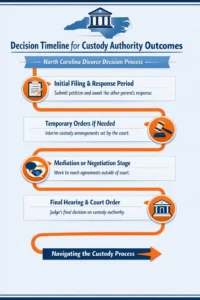
Source: North Carolina General Assembly – Child Support
This timeline typically includes:
- Initial filing and response period, where both parties submit custody requests and responses
- Temporary orders, if needed, allow short-term decisions while the case is ongoing
- The mediation or negotiation stage, where parents attempt to resolve issues outside of court
- Final hearing and court order, where a judge determines authority based on evidence
Knowing how this process unfolds helps you anticipate each step and stay prepared as your case progresses.
How North Carolina Courts Finalize Decision Authority Outcomes
Courts make decisions based on what supports the child’s stability, health, and education. In legal decision making custody North Carolina cases, authority is not about preference but about practical parenting ability and cooperation.
Judges evaluate communication, past involvement, and each parent’s ability to act in the child’s best interests. Whether authority is shared or assigned to one parent, the goal is consistent and informed decision-making.
Understanding this process helps you prepare for custody discussions and present your position clearly.
Speak With A North Carolina Divorce Attorney
When you are dealing with custody decisions, having clear legal guidance can help you understand your rights and responsibilities. Attorneys at Martine Law can explain how courts evaluate decision-making authority and what steps may apply in your case. Call +1 (704) 842-3411 or visit the Contact Us page.
Frequently Asked Questions
Who decides school and medical authority in custody cases?
Courts decide authority based on the child’s best interests. Judges evaluate each parent’s communication, involvement in education and healthcare, and ability to make consistent decisions. In legal decision making custody North Carolina cases, the focus is on which arrangement supports stability and avoids ongoing conflict that may affect the child’s daily needs.
Can both parents share decision-making authority?
Yes, courts may assign joint decision-making authority if both parents demonstrate the ability to cooperate and communicate effectively. Shared authority works best when parents can agree on important issues without repeated disputes. If disagreements are frequent or disruptive, courts may determine that joint authority is not practical for long-term decision-making.
What happens if parents cannot agree on decisions?
When parents cannot agree, important decisions about school or medical care may be delayed or disputed. Courts may intervene to resolve the issue or modify custody arrangements. In some cases, one parent may be given sole authority to ensure decisions are made consistently. Filing unsupported requests can also affect how courts evaluate your position, especially in cases involving emergency custody.
Can decision-making authority be changed later?
Yes, custody orders can be modified if there is a significant change in circumstances. Courts review whether the current arrangement still supports the child’s best interests. If communication issues or new concerns arise, the court may adjust decision-making authority to better reflect the child’s needs and provide a more stable structure.
How does custody relate to parenting plans?
Parenting plans often outline how major decisions are made and which parent has authority in specific areas. These plans help reduce confusion and set clear expectations for both parents. Martine Law can explain how courts review these issues. all (704) 842-3411 or visit the Contact Us page