
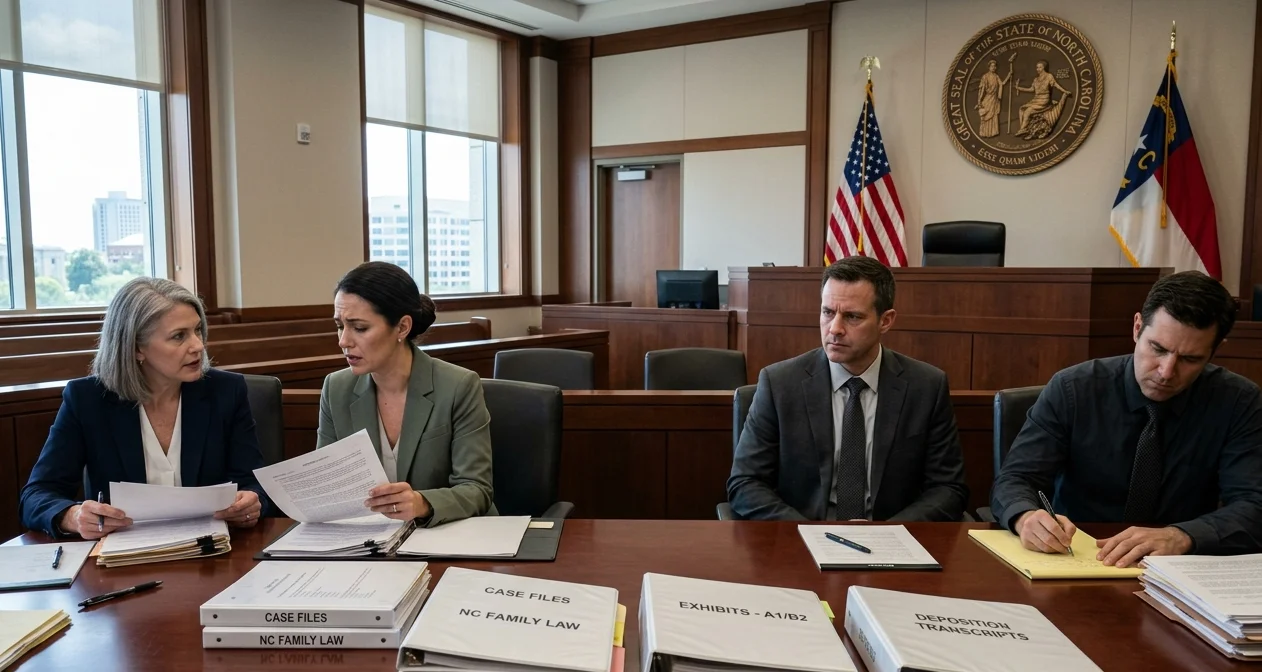
When a divorce trial in North Carolina becomes likely, it often follows unresolved disputes over property, custody, or support. Understanding why divorce negotiation failure occurs and how courts evaluate cases helps you prepare for outcomes and decide your next steps.
When settlement discussions break down, a divorce trial in North Carolina may become the next step in resolving disputes. This often happens when spouses cannot agree on key issues such as property division, custody, or financial support.
At this stage, the focus shifts from negotiation to court evaluation, where a judge reviews evidence and makes binding decisions.
Divorce negotiation failure NC situations can arise for different reasons, including incomplete disclosures, differing expectations, or disagreements about legal rights. Understanding what leads to trial and how courts assess these cases can help you better evaluate your position.
Martine Law’s family law attorney can assist individuals in clarifying these processes and understanding how legal standards apply to their situation.
Why Settlement Discussions Break Down In Divorce Cases
Settlement talks typically fail when both parties cannot reach common ground on key legal or financial issues. In a divorce trial North Carolina, unresolved disputes often push the case into litigation.
Common reasons for divorce negotiation failure NC include:
- Disagreements over property division or asset valuation
- Conflicts about child custody or parenting time
- Lack of full financial disclosure
- Emotional or communication barriers
- Different expectations about support obligations
When these issues remain unresolved, courts step in to make decisions based on evidence and legal standards.
What Happens When A Divorce Trial Becomes Likely
Once settlement efforts fail, the case transitions into preparation for trial. A divorce trial North Carolina process involves structured steps focused on evidence, procedure, and legal arguments.
These steps may include:
- Discovery and exchange of financial documents, including meeting discovery deadlines
- Depositions or sworn statements
- Pre-trial motions and hearings
- Final trial scheduling
At this stage, both parties must present clear, organized information to support their claims. Courts rely on documented evidence and compliance with procedural requirements rather than informal agreements.
Key Factors Courts Evaluate During Divorce Trials
Courts evaluate several factors when deciding outcomes in a divorce trial North Carolina case. These factors depend on the issues being contested.
Courts typically review the following:
- Income, assets, and debts of both parties
- Contributions to the marriage
- Parenting responsibilities and child welfare
- Credibility and consistency of each party
- Compliance with prior court orders
These elements directly influence final decisions on property division, custody, and support.
Know More: Mediation vs. Trial in a North Carolina Divorce: Pros and Cons
Evaluation Factors And Their Legal Impact
Courts rely on specific evaluation factors to guide decisions in a divorce trial. These factors help determine how financial issues, custody arrangements, and overall case outcomes are resolved based on evidence and court standards.
| Factor | What Court Reviews | Potential Impact |
| Financial Disclosure | Accuracy of income and asset reporting | Affects property division outcomes |
| Child Welfare | Best interests of the child | Determines custody arrangements |
| Credibility | Consistency of testimony and evidence | Influences the judge’s decision |
| Marital Contributions | Financial and non-financial roles | Impacts equitable distribution |
Understanding how these factors are applied can help you better assess your position and prepare for how courts may evaluate your case during trial.
After reviewing these considerations, some individuals find it helpful to speak with a family law attorney to understand how these legal standards may apply to their specific situation.
Risks And Outcomes Of Going To Trial
Going to trial introduces both procedural and practical risks. A divorce trial North Carolina case often involves less control over the outcome.
Key risks include:
- Increased legal costs due to extended proceedings
- Longer timelines compared to settlement
- Unpredictable outcomes based on judicial discretion
- Public record exposure of sensitive information
Divorce negotiation failure in NC situations can lead to outcomes that neither party initially expected. Courts base decisions strictly on presented evidence, not informal agreements or expectations.
Steps To Prepare When a Trial Appears Likely
Preparing for trial requires organization and a clear understanding of your position. Early preparation can help reduce uncertainty and improve how your case is presented in court.
-
Gathering Complete Financial Records for Trial
You should collect records such as bank statements, tax returns, and asset valuations. Complete documentation helps establish accuracy and prevents disputes over missing or unclear financial information.
-
Organizing Communication Records and Evidence for Trial
Save emails, messages, and other records that may support your claims. Clear organization makes it easier to present facts and respond to opposing arguments during a trial.
-
Understanding Legal Standards for Your Claims
You need to understand how courts evaluate issues like custody, child support, and property division. Knowing these standards helps you focus on relevant facts rather than unnecessary details.
-
Reviewing Prior Agreements and Financial Disclosures
Go over any previous agreements, filings, or financial disclosures carefully. This ensures consistency and helps identify any gaps or inconsistencies that may affect your case.
Understanding Key Factors In Divorce Trial Decisions
Courts rely on specific factors to decide outcomes in a divorce trial, including financial disclosures, child welfare, credibility, and compliance with legal requirements. The infographic below provides a simplified view of how each factor is evaluated and how it may influence final decisions.
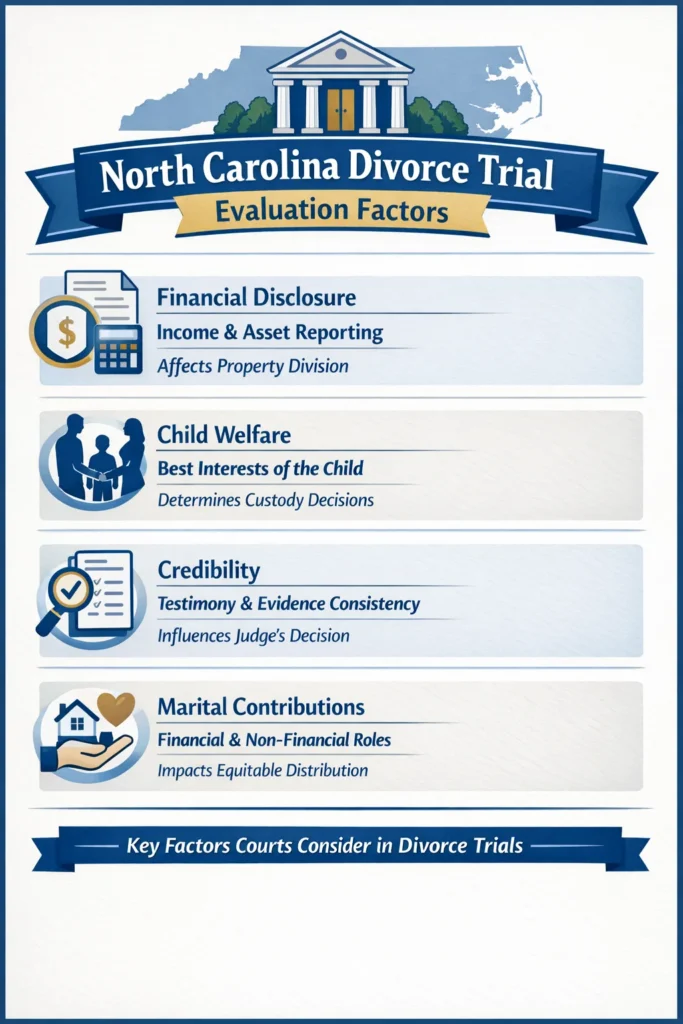
Source: North Carolina Judicial Branch – Equitable Distribution
This visual summary highlights how financial accuracy can affect property division, how child welfare guides custody decisions, and how credibility and consistency influence judicial outcomes.
Reviewing these factors together can help you better understand how courts approach decision-making when a settlement is not reached.
When Divorce Trials Become The Most Practical Option
In some cases, a trial is not avoidable and may be the most practical resolution method. A divorce trial in North Carolina becomes necessary when a settlement is not possible despite multiple attempts.
This may occur when:
- One party refuses to negotiate in good faith
- There are major disagreements on high-value assets
- Custody disputes involve significant concerns
- Evidence needs a formal court evaluation
Divorce negotiation failure NC does not always mean conflict escalation. Instead, it reflects the need for a structured legal decision based on facts and law.
Moving Forward When Trial Becomes Likely In North Carolina
When settlement discussions fail, transitioning to a divorce trial North Carolina process requires careful preparation and realistic expectations. Courts rely on evidence, legal standards, and structured procedures to resolve disputes involving property, custody, and support. While divorce negotiation failure NC may increase complexity, it also provides a clear legal pathway to final resolution.
Understanding how courts evaluate cases and what factors influence outcomes helps you make informed decisions. Each step, from discovery to trial presentation, plays a role in shaping the final result. Martine Law can help clarify how these legal processes apply to your situation and what considerations may affect your case outcome.
Speak With A Family Law Attorney Today
To better understand how a divorce trial may affect your case, you can speak with attorneys at Martine Law. Call (704) 842-3411 or visit the Contact Us page.
Frequently Asked Questions
What triggers a divorce trial in North Carolina?
A divorce trial in North Carolina is typically triggered when spouses cannot resolve contested issues before the scheduled hearing. Common disputes involve equitable distribution, child custody, child support, or spousal support. When divorce negotiation failure NC occurs, the court may require evidence, testimony, and legal arguments so a judge can make binding decisions under North Carolina law.
How long does the divorce trial process take?
There is no fixed timeline for a divorce trial in North Carolina process. The length depends on case complexity, the number of disputed issues, court calendar availability, and whether motions or discovery disputes arise first. Some matters resolve in months, while others take longer when financial records, witnesses, or custody evaluations are involved.
Can a settlement still happen before the trial begins?
Yes, settlement can still occur even after a trial date is set. Many divorce negotiation failure NC cases resolve shortly before trial as both parties gain a clearer understanding of risks and possible outcomes. Courts often encourage settlement at any stage, allowing spouses to avoid the uncertainty and cost associated with a full trial process.
Is going to trial always worse than settling?
No, going to trial is not always worse than settling. While it may involve more time and higher costs, it can be necessary when fair agreements cannot be reached. Divorce negotiation failure NC situations sometimes requires court involvement to ensure decisions follow legal standards and address unresolved disputes in a structured and enforceable manner.
What are the risks of settling before discovery is complete?
Settling before discovery is complete can create risks when important information has not been fully exchanged. You may agree without knowing the full value of assets, debts, income, or liabilities. Incomplete disclosure can affect long-term fairness and may be difficult to correct later unless legal grounds exist to reopen terms.