

Work-related travel can influence custody decisions when it affects availability and routine. In work travel affect custody North Carolina cases, courts review how consistently a parent participates in parenting responsibilities and whether the schedule supports the child’s stability.
Frequent work travel can affect custody when it limits your ability to maintain consistent parenting time and involvement. Courts in North Carolina focus on whether your schedule supports the child’s routine and stability, especially when absences become frequent or unpredictable. Travel demands may influence how parenting time is structured or reviewed.
When evaluating work travel to affect custody North Carolina situations, courts examine your availability, communication, and planning. These factors determine whether your travel disrupts the child’s daily life. Martine Law can explain how courts assess parenting consistency and how travel schedules may shape custody decisions under state law.
How Does Work Travel Impact Custody Decisions
Work travel can impact custody decisions when it reduces your ability to participate consistently in parenting responsibilities. Courts evaluate whether your schedule allows you to maintain a stable and predictable presence in your child’s life.
In North Carolina, judges focus on long-term patterns rather than isolated events. If your travel schedule is predictable and managed, it may not significantly affect custody. However, frequent or last-minute absences can raise concerns about consistency. This is especially relevant in frequent business travel child custody NC situations, where repeated travel may interfere with school routines, activities, and regular parenting time.
Courts also consider whether you maintain communication during travel and whether your parenting role continues despite physical absence. Because consistency is a key factor, your ability to stay involved while traveling becomes important in custody evaluations.
Source: North Carolina Judicial Branch
When these issues arise, courts often interpret them within the structure of existing custody orders and parenting arrangements, especially when reviewing how responsibilities are defined over time.
What Factors Do Courts Review About Travel
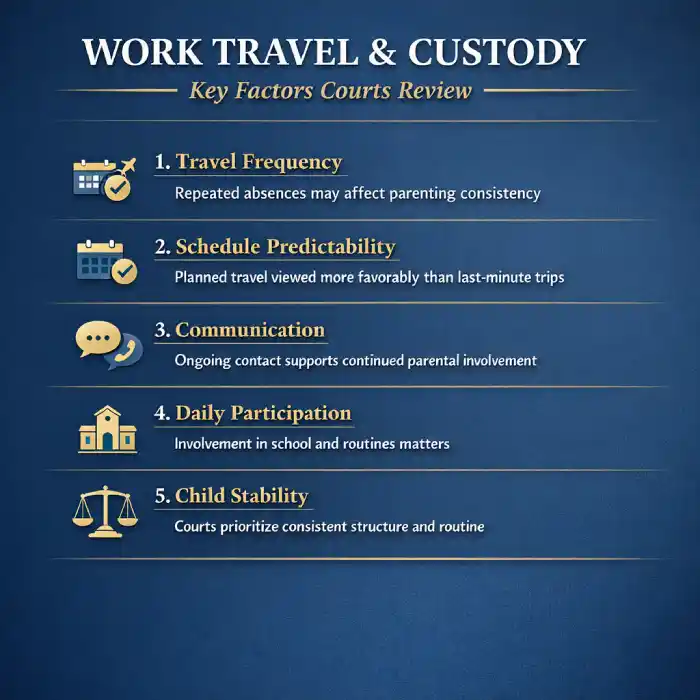
Courts review specific factors to determine how your travel affects parenting responsibilities. These factors help assess whether your schedule supports the child’s best interests.
Key factors courts consider include:
- Frequency and duration of travel
- Predictability of your schedule
- Communication with your child during travel
- Participation in school and daily routines
- Reliability of childcare arrangements
Each of these factors helps courts determine whether your travel is structured or disruptive. For example, predictable travel with consistent communication may be viewed differently than irregular travel that results in missed parenting time.
Know More – How Parenting Plans are Evaluated when Disputes Continue in NC
Can Travel Affect Parenting Time Schedules
Yes, travel can affect how parenting time schedules are structured. Courts may adjust schedules to reflect your availability and ensure the child’s routine remains stable.
| Travel Pattern | Court Interpretation |
| Predictable and planned travel | May allow flexible scheduling adjustments |
| Frequent but structured travel | May require modified parenting time |
| Unpredictable or last-minute travel | May raise concerns about consistency |
| Repeated missed parenting time | May lead to reduced or restructured custody |
When travel is frequent, courts may adjust overnights, weekends, or holidays. In frequent business travel child custody NC cases, this often results in schedules that prioritize consistency while still allowing parenting involvement.
These adjustments are often reflected through structured parenting time schedules, which courts may modify to match your availability while maintaining stability for the child.
After reviewing how travel affects parenting schedules, some people choose to speak with a divorce lawyer to better understand how these factors may apply to their situation.
How Do Courts Evaluate Parenting Availability Consistency
Courts evaluate parenting availability by reviewing how consistently you participate in your child’s life over time. They focus on patterns rather than isolated disruptions.
Judges often review records that show how parenting time is exercised and whether communication continues during travel. They also consider your involvement in school, healthcare decisions, and daily routines. Even when travel is necessary, maintaining a consistent role may support your position.
Under North Carolina law, custody decisions are based on the child’s best interests, which includes stability and continuity. You can review applicable statutes here.
Courts prioritize long-term stability, so consistent involvement often outweighs occasional availability.
Know More – How Temporary Custody Orders Work During Separation in North Carolina
What Happens If Travel Disrupts Parenting Responsibilities
If travel disrupts parenting responsibilities, courts may modify custody arrangements to maintain stability for the child. The focus remains on minimizing ongoing disruptions.
Repeated missed parenting time or inconsistent communication may lead courts to adjust schedules. This could include reducing parenting time or restructuring how responsibilities are shared. In frequent business travel child custody NC situations, courts evaluate whether disruptions are temporary or part of an ongoing pattern.
Over time, consistent disruptions may influence how your parenting role is defined within the custody order. Courts often prioritize arrangements that provide reliability and structure for the child.
How Can You Manage Travel in Custody Cases
You can manage travel in custody cases by planning ahead and maintaining consistent communication. Courts look for structured and reliable approaches that support the child’s routine.
Planning travel schedules in advance, coordinating with the other parent, and maintaining regular contact with your child are important steps. In addition, arranging dependable childcare and keeping clear records of your involvement can help demonstrate consistency.
When your travel is organized and predictable, courts may view your parenting role as stable. This can influence how custody arrangements are structured and maintained over time.
In some situations, adjustments may also involve reviewing child custody modifications, especially if travel patterns change significantly over time.
How Work Travel Shapes Your Custody Case Path
Work travel plays a significant role in how courts evaluate custody because it directly affects your availability and consistency. Judges in North Carolina focus on whether your travel schedule allows you to maintain a stable and predictable presence in your child’s life. When travel is frequent but well-managed, it may not negatively affect custody. However, repeated disruptions or inconsistent involvement can influence how custody arrangements are structured.
Courts rely on patterns, documentation, and communication to assess how responsibilities are handled. Maintaining consistent involvement, even during travel, can support your position. In work travel affect custody North Carolina cases, planning, communication, and reliability remain central to how courts interpret your role and determine appropriate custody arrangements.
Understanding Your Options When Travel Affects Custody
If your work schedule involves frequent travel, understanding how custody rules apply can help you prepare for potential adjustments. You may want to review how parenting time, communication, and documentation are evaluated in your situation. Martine Law can provide guidance on how courts interpret these factors and how they may relate to your case.
If you would like to discuss how your travel schedule fits within custody considerations, you can call (704) 842-3411 or visit the Contact Us page to explore available guidance.
FAQs
Can frequent travel reduce custody rights?
Yes. Frequent travel can influence custody if it limits your ability to maintain consistent parenting time. Courts evaluate how often travel disrupts your schedule and whether you remain involved in your child’s routine. If absences affect stability, adjustments may be considered. However, structured travel with consistent involvement may still support your parenting role.
Do courts consider work obligations in custody cases?
Yes. Courts consider work obligations when evaluating parenting availability and responsibility. In work travel affect custody North Carolina cases, judges assess whether your job schedule allows you to meet parenting duties consistently. They also review how you manage travel while maintaining communication and involvement in your child’s routine and daily responsibilities.
Can custody schedules be adjusted for travel?
Yes. Custody schedules can be adjusted when travel affects parenting time and availability. Courts may restructure schedules to reflect your work commitments while maintaining stability for the child. These adjustments often depend on how predictable your travel is and whether both parents can coordinate effectively to support consistent parenting arrangements.
What if both parents travel frequently for work?
Yes. When both parents travel frequently, North Carolina courts compare availability, flexibility, and ability to maintain consistency. Judges evaluate which parent can provide a more stable routine or whether a shared arrangement can be structured. Communication and documentation often play a key role in determining how parenting responsibilities are balanced.
Is documentation important when travel affects custody?
Yes. Documentation is important because it shows how your travel impacts parenting time and responsibilities. Records such as travel schedules, communication logs, and childcare arrangements provide clarity during court review. These details help courts understand your level of involvement and whether your schedule supports the child’s routine. Reviewing missed visitation and enforcement issues can also help explain how courts interpret repeated disruptions.