
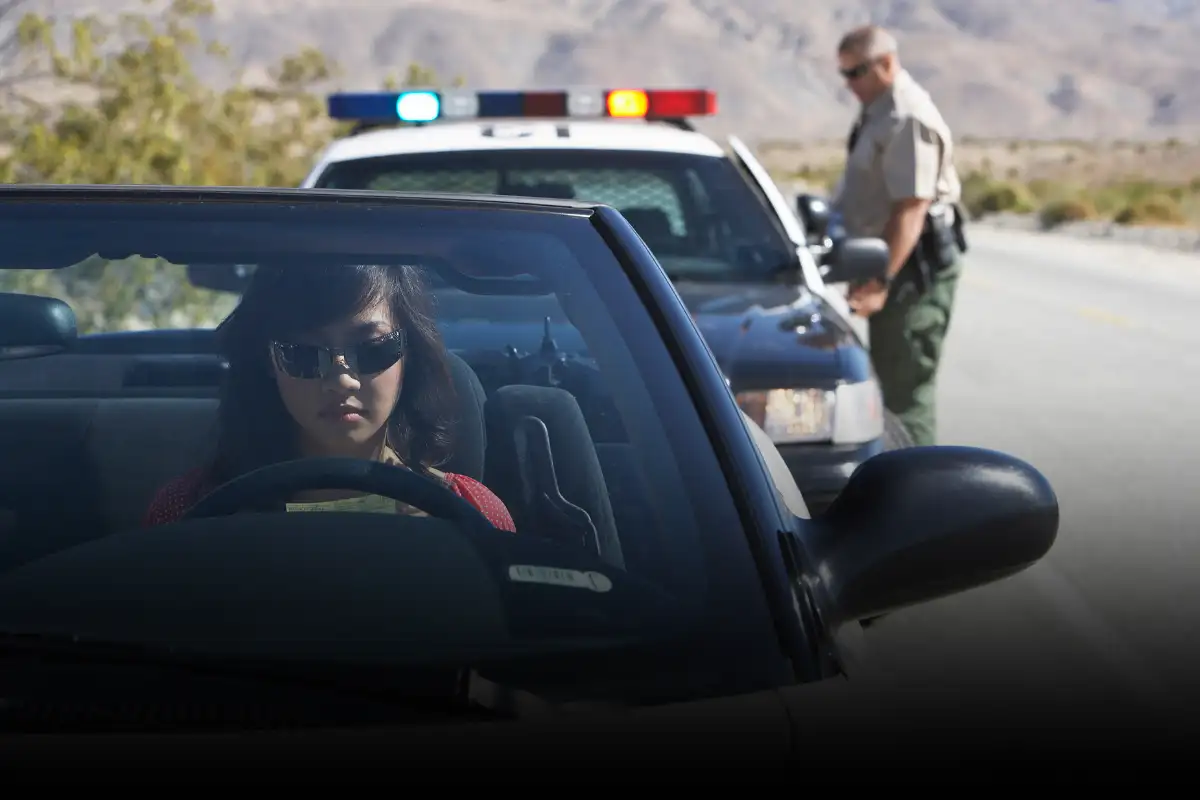
If you are under 21 and blow any alcohol during a traffic stop, North Carolina applies strict zero-tolerance rules. Under the under-21 alcohol law in North Carolina, evidence of alcohol consumption, which may include a measurable BAC, can lead to charges, license suspension, and court involvement. These rules apply regardless of impairment and can affect your driving record and legal status.
Driving before age 21 comes with stricter alcohol-related rules than those applied to adult drivers. Even a small amount of alcohol detected during a traffic stop can lead to legal consequences because the state uses a zero-tolerance standard instead of relying on impairment thresholds.
This approach means your case may move forward based on the presence of alcohol alone. Officers and courts focus on measurable results rather than visible signs of impaired driving behavior.
Martine Law explains how these cases are handled and how underage alcohol-related charges are processed under state law.
Zero Tolerance Standard Applies To Underage Drivers
North Carolina enforces what is commonly described as a zero-tolerance standard for drivers under 21, meaning evidence of alcohol consumption may lead to a violation regardless of impairment. Under the under-21 alcohol law in North Carolina, enforcement focuses on whether alcohol was consumed rather than whether driving ability appeared affected. Because of this, even a small amount of alcohol, when supported by evidence, can result in charges and legal consequences.
Under N.C. Gen. Stat. § 20-138.3, it is unlawful for a person under 21 to operate a vehicle after consuming alcohol.
Officers often rely on roadside screening tools when making initial assessments. These tools help determine whether further testing or investigation is necessary during the stop.
Preliminary breath tests support roadside alcohol detection
Preliminary breath tests are used during traffic stops to detect the presence of alcohol. These tests are not the final evidentiary result, but they help officers decide whether to continue the investigation.
In many cases, the way preliminary breath test rules in North Carolina are applied affects how early evidence is gathered and whether additional chemical testing is requested.
Any measurable alcohol level can trigger charges
A detectable alcohol level, combined with evidence of driving after consumption, can support charges for drivers under 21. You do not need to meet the adult 0.08% BAC limit for the law to apply.
Because of this, even a small reading, when supported by other evidence, can result in legal consequences. This standard reflects how underage alcohol enforcement focuses on age-based restrictions rather than impairment or unsafe driving behavior alone.
Breath Test Results Trigger Immediate Legal Consequences
A measurable breath test result can trigger immediate legal consequences during a traffic stop. These consequences can begin before your case is reviewed in court and may affect your driving privileges.
When alcohol is detected, officers may issue a citation or initiate criminal charges. Administrative actions can also begin through the Division of Motor Vehicles, meaning your license may be suspended shortly after the stop, even if your case is still pending.
You may be required to appear in court to address the charge and respond to the evidence collected. In some cases, additional chemical testing may be requested to support the investigation.
Because these steps happen quickly, your ability to drive can be affected soon after the incident, depending on how the case proceeds.
Civil license revocation can occur before conviction
Civil license revocation can occur before your case is decided in court. This administrative action is separate from the criminal process and focuses on the test result or refusal rather than final guilt.
According to N.C. Gen. Stat. § 20-16.5, certain implied-consent violations, such as refusal or qualifying BAC results, allow the state to suspend your license immediately after the incident, even before any court judgment is entered.
Differences Between Underage Alcohol And Standard DWI Charges
Underage alcohol violations are handled differently from standard DWI cases. You do not need to meet the 0.08% BAC threshold to face legal consequences.
The differences between these two types of charges are outlined below:
| Factor | Underage Alcohol Violation | Standard DWI |
| BAC Requirement | Evidence of alcohol consumption (which may include a measurable BAC) | 0.08% or higher |
| Legal Focus | Presence of alcohol | Impairment or high BAC |
| Applicable Law | Age-based restriction | Impairment-based statute |
| Case Evaluation | Chemical test result driven | Behavior + test results |
| Penalty Structure | Separate classification | Standard DWI penalties |
In many cases, how underage DUI charges are handled in North Carolina depends on these distinctions, especially when evaluating whether a case remains under an underage standard or shifts into a full DWI framework.
Lower BAC levels still support legal charges
Lower BAC levels can still result in charges for drivers under 21. Courts rely on chemical test results rather than requiring visible signs of impairment in these cases.
However, if your BAC is higher, your case may be charged as a standard DWI in addition to or instead of an underage alcohol violation, depending on the circumstances.
Court Process For Underage Alcohol Violations Explained
If you are charged with an underage alcohol violation, your case will proceed through the North Carolina criminal court system. Each stage is structured to evaluate the evidence, determine how the law applies, and reach a final outcome.
Your case typically begins with an initial court appearance, where you are formally notified of the charge and the court reviews basic case details. After this stage, the case moves into evidence review, where breath test results, officer observations, and other relevant information are examined.
As the case progresses, there may be discussions regarding possible resolutions based on the strength of the evidence and the circumstances involved. Some cases are resolved through negotiated outcomes, while others may proceed to a hearing or trial where a judge evaluates the facts.
Under N.C. Gen. Stat. § 20-179, penalties depend on how the offense is classified and the specific facts of the case. Even though underage alcohol violations differ from standard DWI charges, the court process follows a structured sequence that determines how your case is handled and resolved.
Officers Evaluate More Than Just BAC Results
Officers consider more than just breath test results during a traffic stop. Observations can influence whether further testing or charges occur.
They typically evaluate:
- Driving behavior before the stop
- Physical indicators such as odor or speech
- Responses to questioning
- Field sobriety test performance
Field observations influence testing decisions
These observations help determine whether additional testing is necessary. Signs such as poor coordination or inconsistent responses may support further investigation.
Know More – How a Prior DWI Can Affect a New DWI Charge in North Carolina
As a result, your case may include both chemical evidence and officer observations when reviewed in court.
License Consequences Can Extend Beyond Criminal Case
License consequences can apply separately from your criminal case and may begin shortly after the traffic stop. These administrative actions are handled by the Division of Motor Vehicles and do not depend on a final court decision.
In some situations, your license may be immediately revoked based on the test result or refusal. This means you could lose your driving privileges before your case is fully reviewed in court. Depending on eligibility, you may be able to request limited driving privileges, which allow restricted use of your vehicle for essential activities such as work or school.
You may also need to meet specific reinstatement requirements before your full driving privileges are restored. These requirements can include waiting periods, fees, or compliance with additional conditions imposed by the state.
Because these administrative penalties operate independently from the criminal process, they can affect your daily routine and mobility even while your case is still pending.
What This Means For Under 21 Drivers In NC
If you are under 21 and test positive for alcohol during a traffic stop, even a small reading can lead to legal consequences. The under-21 alcohol law in North Carolina allows cases to proceed based on evidence of alcohol consumption, which may include a detectable alcohol level, regardless of impairment.
These cases may involve both court proceedings and administrative license actions. The outcome depends on factors such as test results and officer observations. Martine Law provides guidance on how these cases are handled and what legal processes may apply.
If you want to understand how these rules apply to your situation, you may book a free case evaluation by calling (704) 842-3411 or visit the Contact Us page.
Frequently Asked Questions
Can you be charged even with a very low BAC?
Yes, you can be charged even with a very low BAC if you are under 21. Under the under-21 alcohol law in North Carolina, evidence of alcohol consumption, which may include a measurable BAC, can result in a violation. Courts do not require proof of impairment in these cases, but they do require evidence supporting the elements of the offense, including alcohol consumption while driving. Instead, the focus is on whether alcohol was detected, which means even minimal readings can lead to charges and license consequences.
Does refusing a breath test affect your case?
Yes, refusing a breath test can lead to separate administrative consequences that affect your driving privileges. You may face an immediate civil license revocation, even without a confirmed BAC result. In addition, refusal does not prevent criminal charges. Officers can still rely on observations, statements, and other evidence when determining whether to proceed with an alcohol-related case.
Will an underage alcohol violation affect your future?
Yes, an underage alcohol violation can affect your future depending on how your case is resolved. A conviction or related outcome may appear on your driving or criminal record. This can influence insurance rates, background checks, and future licensing eligibility. The long-term impact depends on the specific charge, case outcome, and whether any record relief options apply.
How does this relate to other DWI charges?
Underage alcohol violations can overlap with underage DWI North Carolina cases when BAC levels meet or exceed standard impairment thresholds. In those situations, the case may be treated as a DWI with additional penalties. If you want broader context on how these cases are categorized, you can review how DWI / DUI charges are typically handled under North Carolina law.
There is no under 21 BAC limit in North Carolina
The most common search on this topic asks what the blood alcohol limit is for a driver under 21. The question has no answer, because North Carolina did not set one. G.S. 20-138.3(a) makes it unlawful for a person less than 21 years old to drive on a highway or public vehicular area while consuming alcohol, or at any time while the driver has remaining in his body any alcohol previously consumed. There is no 0.02, no 0.04, and no threshold of any kind written into the statute.
That matters because the 0.02 figure circulates widely and is genuinely part of North Carolina law, just not this part of it. The 0.02 restriction belongs to G.S. 20-17.8(b)(3), which governs drivers on an ignition interlock after a DWI revocation. It has nothing to do with age.
| Driver under 21 | Driver 21 or over | |
|---|---|---|
| Statute | G.S. 20-138.3, driving by a person less than 21 after consuming alcohol or drugs | G.S. 20-138.1, impaired driving |
| Numeric threshold | None. Any alcohol remaining in the body. | 0.08 or more at any relevant time after driving, or driving while under the influence of an impairing substance |
| Offense class | Class 2 misdemeanor, G.S. 20-138.3(c) | Sentenced at Levels A1 through 5 under G.S. 20-179 |
| Implied consent | Yes, G.S. 20-138.3(b) | Yes |
| Drug exception | A controlled substance lawfully obtained and taken in therapeutically appropriate amounts is not a violation | Any amount of a Schedule I controlled substance or its metabolites is an offense in itself under 20-138.1(a)(3) |
The odor of alcohol, by itself, is not enough
This is the provision most pages on this subject leave out, and for a young driver it is often the whole case.
G.S. 20-138.3(b1) states that the odor of an alcoholic beverage on the driver’s breath is insufficient evidence by itself to prove beyond a reasonable doubt that alcohol was remaining in the driver’s body, unless the driver was offered an alcohol screening test or a chemical analysis and refused to provide all the required samples.
Read that carefully, because it has two halves. If an officer smells alcohol, offers a screening test, and the driver takes it, the odor is not doing the work and the State needs the test result. If the officer smells alcohol and never offers a test at all, the odor still cannot carry the case on its own. The exception opens only when a test was offered and refused.
G.S. 20-138.3(b2) sets the conditions on the test itself. A screening test may be administered and its result, or a refusal, may be used by an officer, a court, or an administrative agency in deciding whether alcohol was present. But no screening test is valid under this section unless the device is one approved by the Department of Health and Human Services and the test was conducted in accordance with that Department’s regulations on its manner and use. Those two conditions are where a screening result is usually challenged.
The punishment, and why a first offense does not authorize jail
G.S. 20-138.3(c) classifies the offense as a Class 2 misdemeanor. North Carolina sentences misdemeanors on the structured chart in G.S. 15A-1340.23(c), where the outcome depends on prior convictions rather than on the facts of the stop.
| Prior conviction level | Prior convictions | Sentence range | Dispositions authorized |
|---|---|---|---|
| Level I | None | 1 to 30 days | Community punishment only |
| Level II | One to four | 1 to 45 days | Community or intermediate |
| Level III | Five or more | 1 to 60 days | Community, intermediate or active |
The first row is the one worth understanding. At Level I a Class 2 misdemeanor authorizes community punishment only. An active jail sentence is not among the dispositions the chart permits, so a first offender with no prior convictions is not facing jail on this charge standing alone. Under G.S. 15A-1340.23(b) the maximum fine for a Class 2 misdemeanor is $1,000 unless a different amount is provided for the specific offense.
None of that makes the charge harmless. The conviction, the license consequences and the record are the real cost, which is the next point.
It is not a lesser included offense of DWI
G.S. 20-138.3(c) says the offense is not, in any circumstances, a lesser included offense of impaired driving under G.S. 20-138.1. That wording is deliberate and it cuts both ways.
It means a driver under 21 can be charged with both offenses arising out of the same stop, because one is not simply a smaller version of the other. It also means the statute caps the result: where a person is convicted under 20-138.3 and of an impaired driving offense out of the same transaction, the aggregate punishment imposed may not exceed the maximum applicable to the impaired driving offense, and any minimum punishment that applies must still be imposed.
Whether a limited driving privilege is available
G.S. 20-138.3(d) allows a person convicted under the section, whose license is revoked solely because of that conviction, to apply for a limited driving privilege under G.S. 20-179.3. The subsection then imposes two requirements, and both must be met:
- The person was 18, 19, or 20 years old on the date of the offense.
- The person has not previously been convicted of a violation of this section.
The age requirement is the trap. A 16 or 17 year old charged under this statute is outside the eligibility the subsection creates, because the statute names only 18, 19 and 20. The youngest drivers, who are the ones most likely to be caught by a rule that turns on any alcohol at all, are the ones the limited driving privilege provision does not reach.
Where the person does qualify, the judge may issue the privilege only if they meet the eligibility requirements of G.S. 20-179.3 other than the requirement in G.S. 20-179.3(b)(1)c, and G.S. 20-179.3(e) does not apply. All the other terms, conditions and restrictions of 20-179.3 do apply. If the person is convicted both under this section and of impaired driving out of the same transaction, G.S. 20-179.3 governs the privilege instead of this subsection.
More questions about the under 21 alcohol rule in North Carolina
What is the legal BAC limit under 21 in North Carolina? There is not one. G.S. 20-138.3(a) prohibits a driver under 21 from driving with any alcohol remaining in the body from prior consumption, with no numeric threshold written into the statute. The 0.02 figure people often cite comes from G.S. 20-17.8(b)(3), which is the ignition interlock restriction after a DWI revocation and is unrelated to age.
Is the smell of alcohol enough to convict a driver under 21 in North Carolina? No, not on its own. G.S. 20-138.3(b1) makes the odor of an alcoholic beverage on the driver’s breath insufficient by itself to prove the offense beyond a reasonable doubt, unless the driver was offered an alcohol screening test or chemical analysis and refused to provide all required samples.
How much jail time can you get for driving after consuming under 21 in North Carolina? The offense is a Class 2 misdemeanor under G.S. 20-138.3(c). On the chart in G.S. 15A-1340.23(c), a person with no prior convictions falls at Level I, where the range is 1 to 30 days and only community punishment is authorized, so an active sentence is not available on this charge alone. Level II is 1 to 45 days, and Level III, five or more priors, is 1 to 60 days and is the first level at which an active sentence is authorized.
Can you be charged with both driving after consuming and DWI for the same stop? Yes. G.S. 20-138.3(c) states the offense is not in any circumstances a lesser included offense of impaired driving, so the two can be charged together. If there are convictions on both out of the same transaction, the aggregate punishment may not exceed the maximum applicable to the impaired driving offense, and any applicable minimum must still be imposed.
Can a 16 or 17 year old get a limited driving privilege after an under 21 alcohol charge? Not under this statute. G.S. 20-138.3(d) limits eligibility to a person who was 18, 19, or 20 years old on the date of the offense and who has no previous conviction under the section. A driver younger than 18 does not meet the first requirement.
Does prescription medication count under the under 21 alcohol rule? Not if it was taken properly. G.S. 20-138.3(a) reaches a controlled substance remaining in the body, but expressly excepts a driver who has in their body a controlled substance that was lawfully obtained and taken in therapeutically appropriate amounts.
Talk to a North Carolina DWI lawyer about an under 21 charge
A charge under G.S. 20-138.3 is an implied consent offense with license consequences that outlast the criminal case, and the evidence questions in subsections (b1) and (b2) are technical enough that they are rarely raised without a lawyer. If you or your child has been charged, call Martine Law at (704) 461-9488. Free consultation, available 24/7.