



If you are facing a theft charge in North Carolina, it can feel unsettling not knowing how the case is being judged behind the scenes. One of the earliest and most important steps is how prosecutors evaluate the evidence connected to the allegation.
Under Chapter 14 of the North Carolina General Statutes, prosecutors review evidence to determine whether each legal element of a theft offense can be supported. That review happens early, and it shapes how the case moves forward from the very beginning.
Being accused of theft can quickly affect your work, finances, and reputation. At Martine Law, we focus on helping you understand how prosecutors evaluate evidence under North Carolina theft law so you can follow what is happening and why.
Want clear, grounded explanations? Contact or call us to talk through how this legal framework applies to your situation.
How Prosecutors use NC Theft Statutes to Classify Your Charge
Prosecutors begin by identifying the correct theft statute. Theft offenses are defined primarily under Article 16 of Chapter 14 of the North Carolina General Statutes. The statute selected determines the required legal elements and the level of exposure.
Key statutes prosecutors rely on include-
- Larceny under N.C. Gen. Stat. § 14 72
- Felony larceny based on value or circumstances
- Shoplifting under N.C. Gen. Stat. § 14 72.1
The above statutes matter because they limit what prosecutors must prove. Once a charge is classified, the evidence review is tied strictly to the elements defined by law.
| Theft Charge | Statutory Basis | Legal Classification |
| Misdemeanor larceny | § 14 72 | Class 1 misdemeanor |
| Felony larceny | § 14 72 | Class H felony |
| Shoplifting | § 14 72.1 | Graduated penalties |
For you, this classification determines the seriousness of the charge before court proceedings even begin. It frames how prosecutors evaluate evidence from the outset.
How Everyday Allegations Become Evidence
Most theft cases arise from ordinary situations rather than dramatic events. Retail stores, workplaces, and shared property settings account for many allegations.
Sources of evidence include-
- Retail loss prevention reports
- Surveillance footage
- Employer audits or inventory records
- Statements from witnesses or managers
These materials are often created before law enforcement becomes involved. When prosecutors review your case, they are examining records that already exist, which explains why the evidence may feel established early.
What Causes a Prosecutor to Review Your Theft Case
Once you are charged with a theft offense, your case is sent to a prosecutor for review. This review begins because a formal charging document has been issued, such as an arrest, a citation, or a criminal summons.
At this point, the prosecutor reviews the evidence collected by law enforcement to determine whether it meets the legal requirements for a theft charge under North Carolina law. This is why the evidence review starts quickly after charges are filed.
What Happens After Prosecutors Begin Evaluating Your NC Theft Case
After receiving the case, prosecutors follow a structured process grounded in statute rather than discretion.
Key procedural steps include-
- Reviewing law enforcement reports
- Matching evidence to statutory elements
- Confirming charge level
- Preparing the case for court scheduling
For someone accused of theft, this explains why early court appearances focus on procedure. Prosecutors are organizing and validating the case, not debating facts.
How Prosecutors Evaluate Evidence to Prove Theft Under North Carolina Law
To move forward, prosecutors must identify evidence supporting every required element of theft, including taking, intent, and ownership.
| Evidence Type | Legal Purpose |
| Surveillance footage | Shows conduct |
| Witness statements | Establishes events |
| Property records | Confirms ownership |
| Value documentation | Determines charge level |
This structure explains why theft cases rely heavily on documentation. Prosecutors must connect each piece of evidence to a statutory requirement.
How Property Value and Ownership Affect Your Legal Exposure
Under N.C. Gen. Stat. § 14 72, property value determines whether a charge remains a misdemeanor or escalates to a felony. Ownership evidence establishes whether the taking was unlawful.
| Factor | Legal Impact |
| Property value | Charge severity |
| Ownership proof | Validates allegation |
| Possession evidence | Supports taking |
For you, this explains why receipts, pricing records, and inventory logs carry legal weight. These documents directly affect the seriousness of the case.
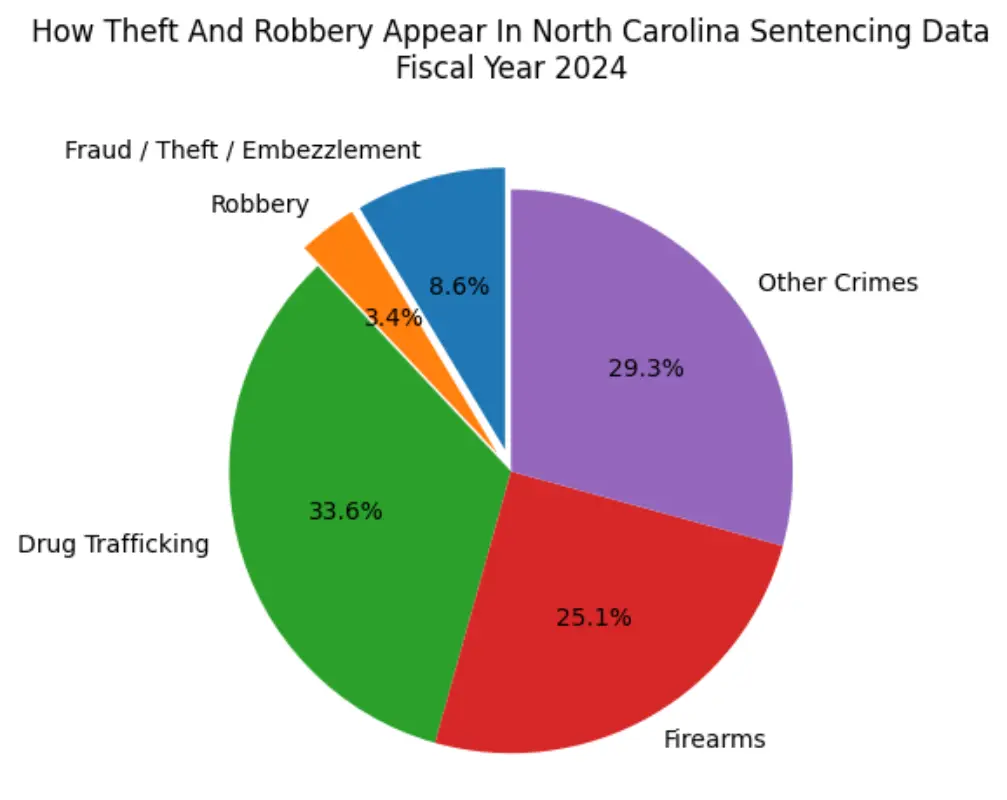
This sentencing data helps place theft cases in context within North Carolina’s criminal justice system. While offenses like drug trafficking and firearms account for a larger share of sentenced cases statewide, theft and related property crimes remain distinct and regularly prosecuted categories.
Why Legal Guidance Matters When Prosecutors are Evaluating Your Theft Case
When you are facing a theft charge in North Carolina, legal guidance is essential because prosecutor decisions are based on how statutes, evidence, and procedure fit together, not on informal explanations or assumptions. Understanding how your charge is classified, how evidence is measured against legal requirements, and where your case sits procedurally helps you make sense of why certain decisions are made as the case moves forward.
Clarity reduces confusion and helps you follow the process in legal terms rather than speculation. At Martine Law, we help people understand how North Carolina theft law applies to their case and what the legal framework allows at each stage.
Key Takeaways
- Prosecutors evaluate theft cases by matching documented evidence to statutory elements under North Carolina law.
- Charge classification determines what evidence matters and how exposure is structured early.
- Property value and ownership documentation directly affect the severity of theft charges.
- Understanding this process helps accused individuals stay oriented as cases move forward.
If you are facing a theft allegation, understanding how evidence is evaluated can bring clarity at a difficult moment. At Martine Law, we help you understand how North Carolina theft law applies to the evidence in your case so you are not left guessing.
You can contact or call us to talk through how this process works and what comes next.
Frequently Asked Questions about Theft Cases in NC
- Does a theft charge stay on a criminal record even if the case does not go to trial?
A theft charge becomes part of the court record once filed, regardless of whether the case proceeds to trial. How long it remains visible depends on how the case is resolved and how North Carolina’s record-keeping rules apply. - Can multiple theft charges be filed from the same incident?
Yes. Prosecutors can file multiple charges arising from a single incident if the alleged conduct fits more than one statutory offense. Each charge is evaluated separately based on its legal elements. - Does the location of the alleged theft affect how the case is handled?
The location can affect jurisdiction, court assignment, and the type of evidence involved. Retail, workplace, and private property allegations each generate different documentation and investigative records. - Are theft cases handled differently in district court and superior court?
Yes. Misdemeanor theft charges are handled in district court, while felony theft cases proceed in superior court. The court level affects procedure, scheduling, and how the case moves forward. - Does a theft charge affect professional licenses or background checks?
A pending or resolved theft charge can appear on background checks and may affect professional licensing depending on the governing rules of the licensing authority. The impact depends on the nature of the charge and how it is recorded.