



For any North Carolinian facing a first-time assault charge in NC can feel like stepping into a world they have never known or explored before. Most people are not aware of the rules, deadlines, and procedures when they first enter the courtroom. Surely, the anxiety levels are at their peak as they don’t know what’s going to follow up.
They are swirled by numerous questions about whether they will be penalized, how to apply for bail, and whether the court will accept or reject their bail plea.
However, the truth is that in North Carolina, the first appearance in the courtroom is not designed to judge you or prove your guilt. It is a legal and procedural step in which the court formally brings you into the criminal justice system, outlines your rights, and initiates the next steps in your case.
This is quite a crucial stage where you must understand the processes and what actually happens at first appearance to transform your apprehension into clarity and control.
Martine Law criminal defense lawyers help you demystify the first phase of a court hearing, providing clear direction from the outset, ensuring you know what to expect and how to protect your rights.
You can contact us to discuss your situation and get comprehensive guidance before your first court appearance.
How the First Appearance Sets the Stage for Your Case
When the police arrest and charge you with assault, your first court appearance becomes the gateway to entering the legal system. To be precise, this is a routine process, but the initial hearing in the North Carolina court serves as a formal acknowledgment that you are facing criminal proceedings.
The North Carolina law requires police to present the accused to the court promptly after arrest to initiate the hearing process. The primary purpose of this hearing is to ensure the accused understands the charge and their constitutional rights, and not to debate guilt or innocence.
What Happens in the First Hearing: What the Judge Says and What You Should Know
Most people are anxious and skeptical about their first hearing, which is understandable. However, you must remain calm and follow all instructions verbatim.
During your first hearing for a first‑time assault charge in NC, the court almost always takes the procedural steps.
It begins with the judge confirming your identity, informing you of the charge framed against you, discussing your legal representation options, and addressing your bail or release conditions if applicable to your case.
The judge also explains your constitutional rights, such as your right to remain silent and your right to counsel.
Now, if you are wondering what happens if you get charged for assault, will you be put behind bars, or will you be required to pay a heavy monetary penalty?
To answer the question, this is not a stage at which evidence is presented or the court examines facts in depth.
Most people don’t realize this, but the judge may also discuss release conditions during this hearing. Here, the court determines whether to release the accused on their own recognizance (without bail) or to set conditions for their release pending further hearings.
The judgment primarily depends on several key factors, such as the nature of the alleged offense and the accused’s personal background.
Why This Hearing Matters More Than You Think
Although the first court appearance on an assault charge may seem brief or administrative, it carries significant weight and implications for the case. This is because it is the first time the court recognizes the accused’s involvement in the process and sets the path ahead.
The judge may schedule future proceedings, such as a preliminary hearing, a motions calendar, or a trial date. What is notable here is how further hearings are conducted and the conditions imposed on bail or release. All these factors affect the accused’s life, including employment, personal relationships, and peace of mind.
At this stage, you are also beginning the legal timeline of your case. Specific deadlines are triggered here, including the due date to file documents, collect evidence, and motions, and to respond to the complainant’s allegations.
Common First Appearance Outcomes and What They Mean
Do you want an overview of the potential outcomes of your first court appearance and what they may imply? For a first‑time assault charge in NC, you may have to face the following results.
| First Appearance Outcomes | What Do They Imply Legally |
| Released on Recognizance | You are released without paying bail and are expected to return for future court dates. |
| Conditions of Release Set | Your release may include conditions such as no contact with specific individuals. |
| Monetary Bail | The judge sets a bail amount you must pay or secure before release. |
| Consulting with Your Attorney | Having legal counsel ensures your rights are protected, and the next steps are clearly explained. |
| Continuation of Hearing | The judge may delay most decisions until necessary documentation or counsel involvement is confirmed. |
Understanding these possibilities helps reduce uncertainty, especially if this is your first experience with the criminal justice system.
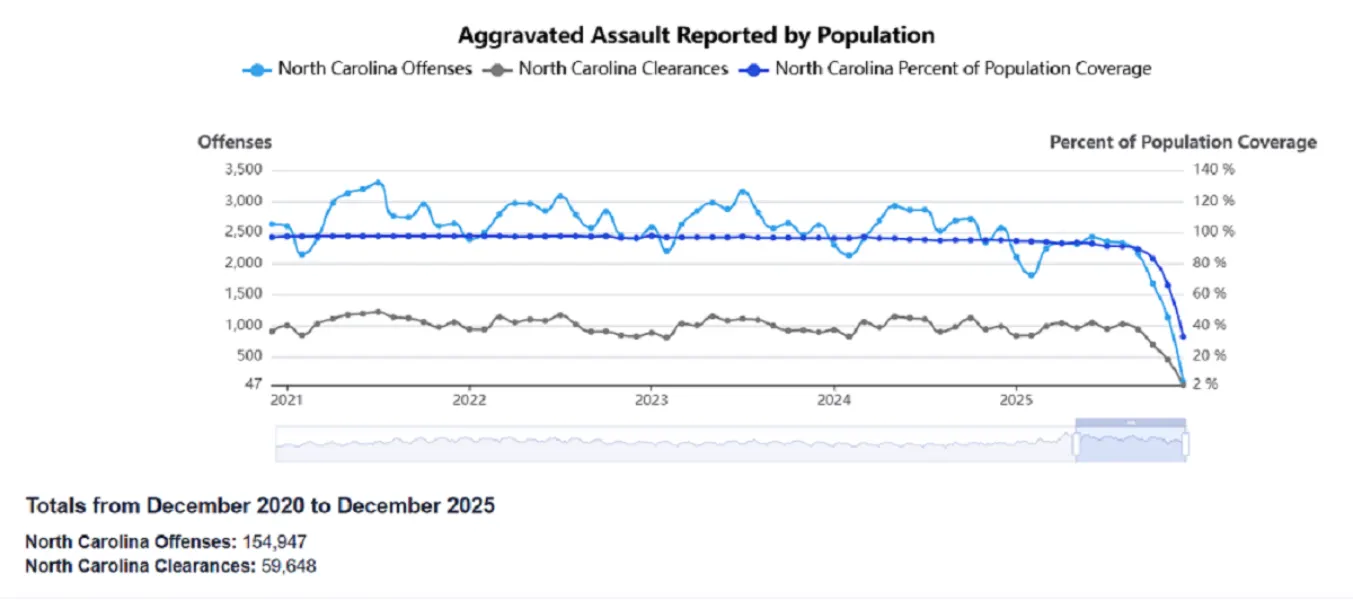
According to the FBI Crime Data Explorer, North Carolina reported 154,947 aggravated assault offenses from December 2020 to December 2025, with 59,648 cleared by law enforcement during the same period.
How the Court Explains Your Rights at the Hearing
When you appear before the judge for the first time, the most necessary aspect is to understand what rights you have at this stage. The judge must clearly articulate these rights to protect the fairness of the process.
This is because it helps you explore your legal options and determine what happens if you are charged with assault. Your rights are central to how your case will proceed.
The Court can uphold your constitutional protections, including the right to remain silent, the right to an attorney, and the right to a fair trial. The court wants to ensure that you are fully aware of your situation and position in the process, including the meaning of the charge against you.
These explanations are not merely formalities; they are essential safeguards within the legal system.
What Happens Next After Your First Court Date
After your first hearing is over, the judge may issue another schedule to proceed further on your case based on its severity. After your first appearance in court, the judge may:
- Order a preliminary hearing where evidence may begin to be examined
- Set deadlines for pretrial motions
- Schedule a discovery exchange with the prosecution
If you plan to file a plea at this early stage, it is recommended that you consult criminal defense attorneys first and seek their advice.
Even for a first‑time assault charge in NC, the choice of a plea, guilty, not guilty, or no contest carries implications that affect the later stages of your case.
And don’t assume you will be declared guilty or innocent at the first hearing. This is a misconception; you may be required to appear multiple times until the judge issues a final judgment in your case.
How to Get Rid of That Emotional Impact
If you have been charged with an assault, controlling your emotions, frustrations, and anger can be pretty challenging, especially if you know you are not at fault.
Many people report feelings of perplexity, mental phobias, and uncertainty because they do not know how this criminal case is going to influence their everyday life, family, and job.
Several individuals who are facing a legal trial because they are accused of assault have never had a prior criminal history. They are all experiencing this bad phase for the first time.
The first appearance, though procedural, is also a psychological milestone. It marks the transition from uncertainty to engagement with a defined legal process.
What Your First Appearance Sets in Motion
Imagine receiving a North Carolina court order or summons from a police station for an assault charge for the first time in your life. The situation can be intimidating and highly disturbing for anyone who knows that a serious threat of arrest or an initial court appearance is looming.
However, it is time to set aside your emotions and any feelings of anguish and focus on protecting yourself, your rights, and your future. And the best way to weather this storm is to prepare for this step.
You may contact Martine Law for informed guidance tailored to your situation. If you wish to speak with our legal team, please dial +1(704) 842-3411 to discuss your case confidentially.
Frequently Asked Questions About Your First Court Appearance
What should I expect during a first court appearance for an assault charge in North Carolina?
At your first court appearance, the judge will formally notify you of your charge, explain your rights, and discuss legal representation. There may be decisions regarding bail or release conditions. You aren’t entering a plea of guilty or not guilty yet; this hearing focuses on procedural fairness and on understanding your role in the process.
How can having an attorney in N.C. support you at your first appearance?
Having an attorney at your first appearance helps ensure your rights are protected, and court procedures are clearly explained. Legal counsel can clarify the charge, address bond or release conditions, and help you understand what happens next in the process, which can be especially valuable when facing an assault charge for the first time.
Will the judge decide guilt at the first appearance?
No. The first appearance does not determine guilt or innocence. It is a procedural hearing where the court ensures you understand your charges and rights. Evidence and factual disputes are usually examined later in the process, such as during a preliminary hearing or trial.
Can my release conditions be set at this first hearing?
Yes, the judge may set conditions for your release, such as no contact with specific individuals or other restrictions. These conditions are meant to ensure your appearance in future court dates and protect community safety, and they become part of your case’s procedural framework.
What happens if I miss my first court appearance?
Missing your first court date can have serious consequences, including the issuance of a bench warrant for your arrest. Courts take appearances seriously because the process relies on your participation. If attendance is impossible due to circumstances, contacting the court or your attorney in advance is crucial.