



A divorce in North Carolina may seem simple at first, but it is a legal process governed by the North Carolina General Statutes, Chapter 50. You may think that once you finish the separation, the court process happens automatically.
However, the divorce process in NC follows specific steps, and the timeline can change based on court schedules and case details. Court procedures, required forms, and scheduling all play a part. Financial issues, missing paperwork, or administrative steps can slow a case even when the divorce is uncontested.
NC divorce law uses a structured system that depends on accurate information and proper filing at each stage. When you understand how the process works, it becomes easier to see why some divorces proceed steadily while others take longer.
If you need clear guidance on divorce or child custody in NC, our North Carolina family law attorneys can protect your rights, explain the process, and discuss your next steps.
To discuss your divorce or child custody case, contact Martine Law at +1(704) 842-3411 for a consultation.
The Required One-Year Separation Period
The path to divorce in this state is managed by N.C.G.S. § 50-6. This law requires spouses to live in separate homes for at least one year before filing. At least one person must also plan for the separation to be permanent.
This one-year wait is a strict rule. During this time, many people make temporary plans for their children or their money. These plans help manage daily life until you are legally allowed to file for divorce.
How the Divorce Case Is Started in North Carolina Courts
A divorce case in North Carolina officially begins when one spouse files the required divorce papers with the district court. These documents are submitted through the North Carolina court system and usually include forms that identify both spouses, confirm the one-year separation period, and request an absolute divorce.
The court also requires supporting documents, such as a summons and a civil action cover sheet. Filing these documents formally opens the case and places it on the court’s schedule.
Submitting complete and accurate paperwork is important. Missing information or incorrect forms can delay processing and slow the overall divorce process in North Carolina.
How the Other Spouse Is Officially Served with Divorce Papers in North Carolina
After filing, the other spouse must be officially notified. This is called “service of process.” This step often determines how long a divorce takes in NC. Common ways to serve papers include:
- Sheriff service: A deputy delivers the documents in person.
- Certified Mail: The papers are sent with a tracking number that requires a signature.
- Acceptance of service: The spouse signs a form saying they received the papers.
How Long Does a Spouse Have to Respond in a North Carolina Divorce?
Once served, the other spouse has 30 days to respond.
- If they don’t respond: The case is “uncontested” and can move to a final hearing quickly.
- If they respond: If they disagree on things like money or custody, the case becomes “contested” and will take more time to resolve.
This stage is a major factor in divorce timelines.
Temporary Court Orders Help While the Case is Pending
Daily life does not stop while a case is pending. Because the divorce process in NC can take time, the court may issue temporary orders to maintain stability. These orders are governed by N.C.G.S. § 50-13.5 and can cover:
- Child Custody: Temporary parenting schedules and rules.
- Child Support: Payments to help with the child’s needs right away.
- Post-Separation Support: Temporary financial help for a spouse before alimony is decided.
- Marital Home: Deciding who stays in the house while the case moves forward.
These orders stay in place until the judge signs a final agreement or the case ends.
How the North Carolina Divorce Process Works Step-by-Step
The divorce process in North Carolina moves through several predictable stages, even though every case is unique. Understanding the overall path helps explain why timelines differ between uncontested and contested cases. The overview below shows how a typical case moves from separation to a final divorce judgment in family court.
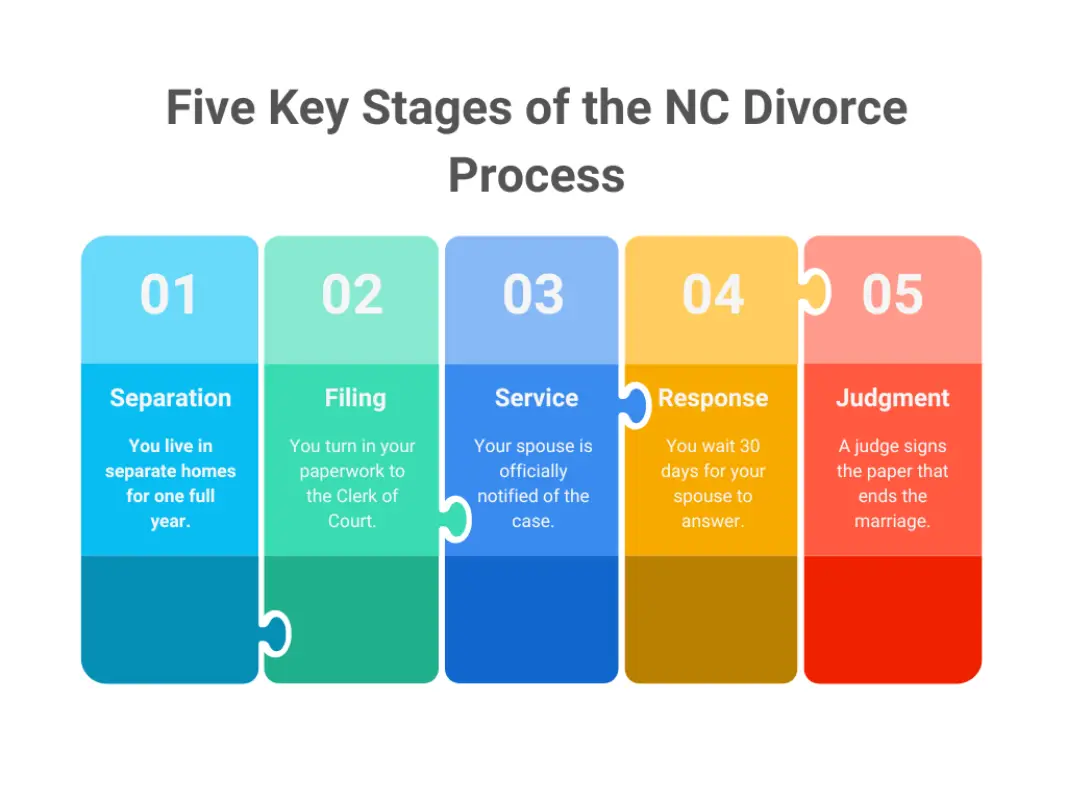
North Carolina courts provide official forms and instructions, but completing them correctly and on time can be challenging. Our attorneys help ensure documents are accurate, deadlines are met, and your rights are protected at every stage of the process.
Sharing Financial Information Is an Important Step
When support or property division is at issue, spouses usually exchange financial information. This process is called “discovery” and is governed by Rule 26 of the NC Rules of Civil Procedure.
It may include:
- Income documents and tax returns.
- Bank records and credit card statements.
- Property appraisals.
- Business financials.
Accurate information helps the court divide assets and debts fairly and set appropriate support when needed.
Do Most North Carolina Divorces Settle in Mediation?
North Carolina courts encourage settlement when possible because it often saves time, limits conflict, and gives both spouses more control over the outcome. Many cases use mediation to resolve custody or property issues through the NC Family Financial Settlement Program, which is administered by the state courts.
A fair settlement can shorten the court process and reduce the stress of extended litigation. When an agreement is reached, the court can approve it and make it part of the final divorce order.
Martine Law helps clients prepare for negotiation or mediation, understand their rights before agreeing to terms, and work toward settlements that protect their finances, parental time, and future stability.
When Does a North Carolina Divorce Case Go to a Hearing or Trial?
When disputes cannot be resolved through negotiation, the case moves to hearings or a trial. The judge reviews the document and testimony and applies North Carolina law. The court may decide on equitable distribution, alimony, and child custody.
The absolute divorce itself can still be granted even while related issues continue, as long as claims were filed before the divorce judgment.
When Does an Absolute Divorce Become Final in North Carolina?
The divorce becomes final when the judge signs the Judgment of Absolute Divorce and the clerk records it. At that point, the marriage legally ends.
Even after a divorce, some issues may continue, such as child custody modifications or support enforcement.
North Carolina Domestic Caseload Trends (FY 2021-2025)
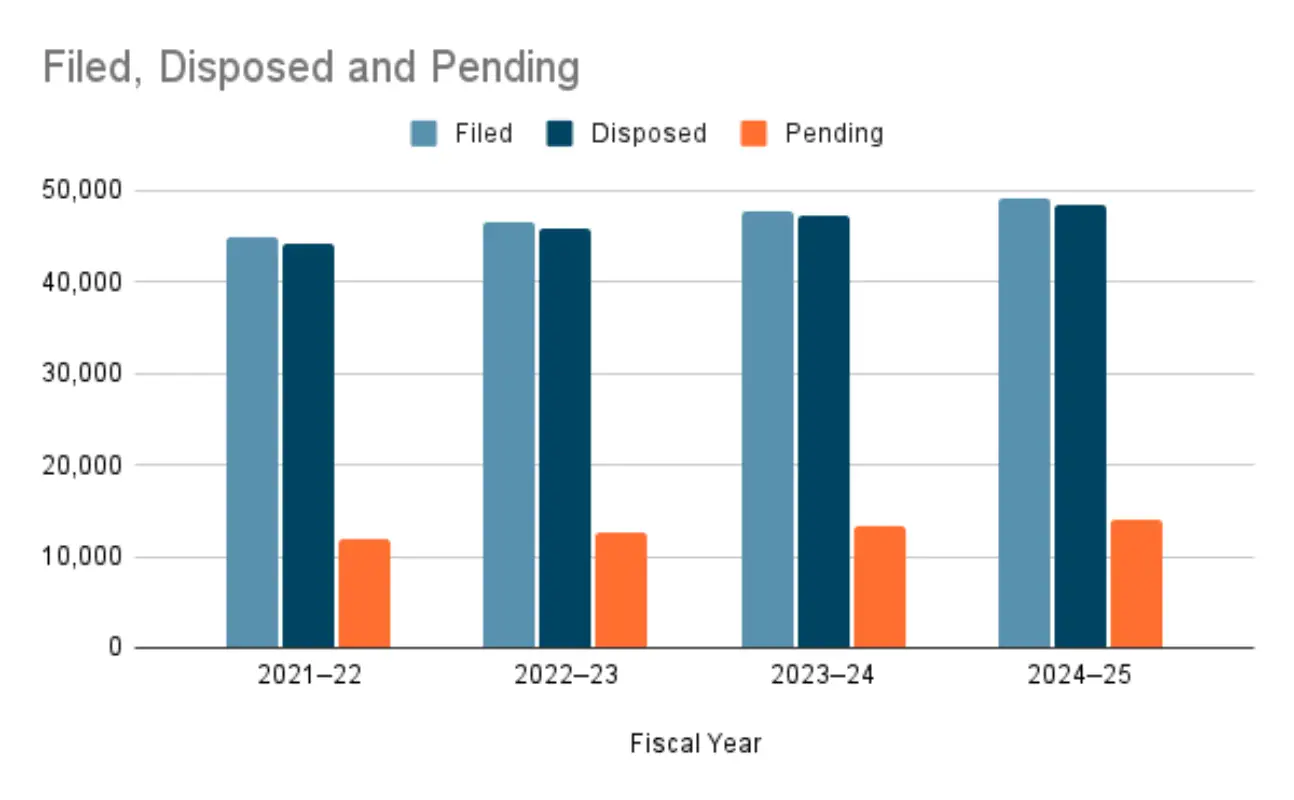
The data shows a steady rise in domestic case filings and pending matters, while dispositions have increased at a similar pace. A higher number of pending cases can extend scheduling times in some counties, which helps explain differences in divorce timelines across North Carolina. These figures are from the NC Domestic Caseload Report.
How Long Does a Divorce Take in North Carolina?
There is no single answer for every case. How long a divorce takes in NC depends on several factors:
- Success of the service of process.
- Number of contested issues.
- Mediation or settlement results.
- Local court caseloads.
Uncontested divorce generally moves faster after the one-year separation period. Contested cases with custody, support, or property disagreements often take longer because more court steps are required.
Let’s Work Toward a Clear Path Through Your Divorce
North Carolina divorce cases move through the court system step by step, and every case follows its own path. What matters most is completing each requirement correctly.
Separation, filing service, response, and final orders. When paperwork is accurate and deadlines are met, the process is easier to understand.
Having the correct information helps you plan, avoid mistakes, and understand what will happen next in family court. You do not have to sort through the process on your own.
If you want guidance about your divorce or any related custody or support issue, Martine Law can walk you through your options and how the law applies to your situation.
Call us at +1(704) 842-3411 to discuss your next step.
Frequently Asked Questions About Filing for Divorce in North Carolina
1. How long must you be separated for a North Carolina divorce?
To file for an absolute divorce in North Carolina, you must be separated for at least one year and one day. Under N.C.G.S. § 50-6, the state requires a continuous physical separation in different residences with the permanent intent of at least one spouse to end the marriage. Living in separate bedrooms does not qualify.
2. Once filed, how long does a divorce take to finalize in NC?
After filing your divorce, a straightforward absolute divorce generally takes 45 to 90 days to finalize. This period accounts for the 30-day mandatory waiting period after your spouse is served with papers. If your case involves contested issues such as alimony or asset division, the timeline can extend significantly depending on mediation and the local court’s trial calendar.
3. How do you serve divorce papers in North Carolina?
After filing, you must legally notify your spouse by “serving” the papers via the County Sheriff or Certified Mail (return receipt requested). If using the mail, you must later file an Affidavit of Service with the court. Proper service is a mandatory step under North Carolina law to ensure the court has jurisdiction over your case.
4. Does my spouse have to agree to the divorce in NC?
No, your spouse’s consent is not required to obtain an absolute divorce in North Carolina. Because NC is a “no-fault” state, you can file unilaterally as long as you meet the one-year separation and residency requirements. Even if your spouse refuses to sign the papers, the court can grant the divorce once legal service is completed.
5. Can I file for divorce in NC if I just moved somewhere else?
To file for divorce in North Carolina, at least one spouse must have been a resident of the state for at least six months immediately preceding the filing. This residency requirement must be met in addition to the mandatory one-year separation period. If neither party meets this timeline, you must wait until the six-month residency mark is reached.