



In the early stages of a North Carolina custody case, parenting schedules are addressed through temporary court orders issued under North Carolina General Statutes § 50 13.2 and § 50 13.5. These early custody schedules establish where your child lives and how parenting time is divided while the case moves forward. For many parents, this period can feel uncertain and disruptive. These orders are not final determinations. They provide immediate structure so daily life can continue in an organized, legally recognized way while the court process unfolds.
When custody issues arise, understanding how parenting schedules are handled at the beginning helps you move forward with clarity. At Martine Law, we help you understand how North Carolina courts structure early custody schedules so you know what to expect and how the process works.
You can contact or call us to discuss how these rules apply to your situation.
How NC Law Defines Parenting Schedules at The Start of a Custody Case
North Carolina General Statute § 50 13.2 requires courts to make custody determinations based on the best interest of the child. Parenting schedules fall within physical custody and determine where your child resides during the case.
Custody classifications recognized by statute include-
- Sole physical custody
- Joint physical custody
- Temporary custody under § 50 13.5
- Permanent custody under § 50 13.2
| Custody Classification | Statutory Authority | Effect On Parenting Schedule |
| Sole physical custody | § 50 13.2 | One primary residence |
| Joint physical custody | § 50 13.2 | Divided residential time |
| Temporary custody | § 50 13.5 | Interim schedule |
| Permanent custody | § 50 13.2 | Long-term structure |
Therefore, the court must first decide what type of custody is being addressed before assigning specific parenting time.
That legal classification controls how flexible or structured the schedule will be early on.
How Your Parenting Conduct Before Filing Influences Early Scheduling
Before a case is filed, parenting schedules often develop through daily decisions rather than court orders. Courts look closely at these early arrangements when deciding how to structure temporary schedules.
Judges review who handled the following-
- School routines
- Overnight care
- Transportation
- Day-to-day supervision.
If you have been consistently responsible for specific parenting duties, that history becomes part of the court’s evaluation under § 50 13.2.
Early conduct helps the court understand what has worked for the child so far.
What Procedural Actions Bring Parenting Schedules Before a Judge
Parenting schedules are presented to the court through defined procedural steps. Either parent may request temporary custody relief under § 50 13.5 once a case begins.
| Procedural Action | Legal Effect |
| Custody complaint filed | Opens the custody case |
| Motion for temporary custody | Requests an early schedule |
| Emergency custody motion | Immediate court review |
| Mediation referral | Required under § 50 13.1 |
From your perspective, the way a case enters the system affects how quickly a judge addresses scheduling. Some filings result in faster court involvement than others, which directly impacts how soon a formal schedule is set.
What Happens after The Court Takes Control of Scheduling
Once a custody case is filed, the court follows a structured process. Parenting schedules are addressed early to provide stability for your child.
You will move through service of pleadings, mandatory mediation under § 50 13.1, temporary custody hearings, and entry of temporary custody orders under § 50 13.5. Each step replaces informal arrangements with a court-directed structure, so expectations are clear for both parents.
How Temporary Custody Orders Shape Parenting Time
Temporary custody orders focus on immediate function rather than final resolution. Courts apply the statutory best-interest factors without conducting a full evidentiary trial.
| Issue Considered | How It Affects Your Schedule |
| School calendar | Determines weekday placement |
| Work hours | Sets exchange timing |
| Distance between homes | Limits or allows overnights |
| Child routines | Preserves consistency |
This means early schedules are built around practical realities. Courts focus on what keeps your child’s daily life steady while the case continues.
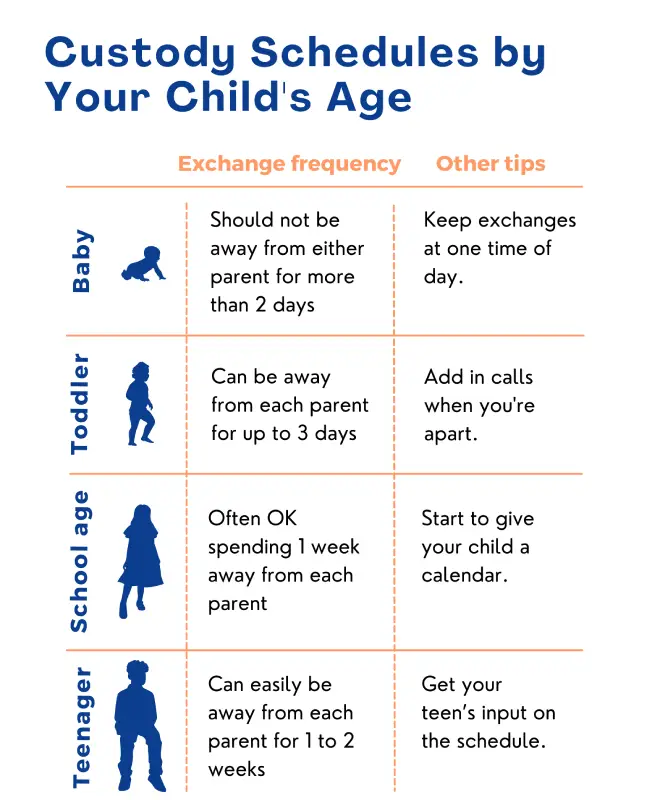
An age-based breakdown helps explain why early parenting schedules often emphasize shorter exchanges for younger children and longer intervals for older ones. At this stage, courts are not locking in permanent arrangements. They are focusing on routines that support stability, developmental needs, and predictability while the case moves through the legal process.
How Legal Guidance Influences Early Parenting Schedule Decisions
Early custody scheduling is procedural and statute-driven. Legal guidance helps ensure information presented to the court aligns with statutory requirements.
| Area Of Guidance | Why It Matters To You |
| Pleadings | Defines issues clearly |
| Schedule proposals | Creates a workable structure |
| Statutory framing | Aligns with court analysis |
For parents, this guidance helps keep early proceedings focused and organized rather than reactive.
Key Takeaways
- Early custody schedules provide a temporary structure based on statutory custody classifications and immediate child stability needs.
- Courts rely on concrete parenting history and logistics rather than preference when setting initial schedules.
- Procedural filings determine how quickly parenting schedules are addressed and structured by the court.
- Understanding early custody law helps parents navigate the process with clarity during the informational stage.
If you are dealing with a custody issue, understanding how parenting schedules are addressed early is essential. At Martine Law, we help you understand how North Carolina courts structure custody schedules so you can move forward informed.
Contact or call us today to discuss your situation and what happens next.
Frequently Asked Questions about Parenting Schedules in NC
- How soon does the court address parenting schedules?
Courts address parenting schedules through temporary custody orders once motions are filed. The timing depends on procedural posture and court availability, not informal arrangements. - Are early custody schedules permanent?
Early schedules are temporary and remain in place until modified by a later court order. They are designed to manage daily life while the case proceeds. - Does joint custody require equal parenting time?
Joint custody reflects shared responsibility for the child. It does not require identical parenting time or equal division of days. - Are early schedules based on what parents ask for?
Courts consider requests, but decisions are grounded in statutory best interest factors rather than parent preference alone. - Does mediation decide the parenting schedule?
Mediation helps parents discuss schedules, but any agreement must still comply with court requirements and statutory standards.